
S1: Surgeon Major John Findlay Arthur

Inscription
Front Panel
IN MEMORY OF
DAVID ARTHUR
LATE FARMER IN
WELLHILL
WHO DIED 8TH MARCH
1860
AGED 79 YEARS
AND OF
JANE FINDLAY
HIS WIFE
WHO DIED 11TH MARCH
1860
AGED 80 YEARS
ALSO
OF THEIR SON JAMES
WHO DIED IN
INFANCY
ALSO
THE UNDERNOTED
J F ARTHUR ESQ. M.D. C.S.I.
WHO DIED AT LOCHSIDE HOUSE
26TH JULY 1886
AGED 79 YEARS
ERECTED BY
J F ARTHUR ESQ MD CSI
SURGEON MAJOR
HM’S INDIAN ARMY
Side Panel
TO THE MEMORY OF
ELIZABETH HOUSTON
WIFE OF
WILLIAM ARTHUR
LATER FARMER IN
WELLHILL
WHO DIED 3RD AUGUST
1885
AGED 59 YEARS
THE ABOVE
WILLIAM ARTHUR
WHO DIED 20TH FEBRUARY
1894
AGED 84 YEARS
.
Surgeon Major John Findlay Arthur, C.S.I.
- HM’s Indian Army
- Born 17 Jan 1807, Baptised 20 January 1807, New Cumnock
- Died 26 July 1886, Age 79 , New Cumnock
- John Findlay Arthur is the only ‘soldier’ in our Auld Kirk Soldier Trail that did not die while serving in this army,
Family Life
John Findlay Arthur was the eldest of five children of David Arthur and Jane Findlay. He was born at Crook , a small cottage on the lands of Wellhill that were later farmed by his father. His brother William (b.1809) was also born at Crook, while siblings Margaret (b.1811), David (1813) and James (b.1816) were all born at Wellhill.
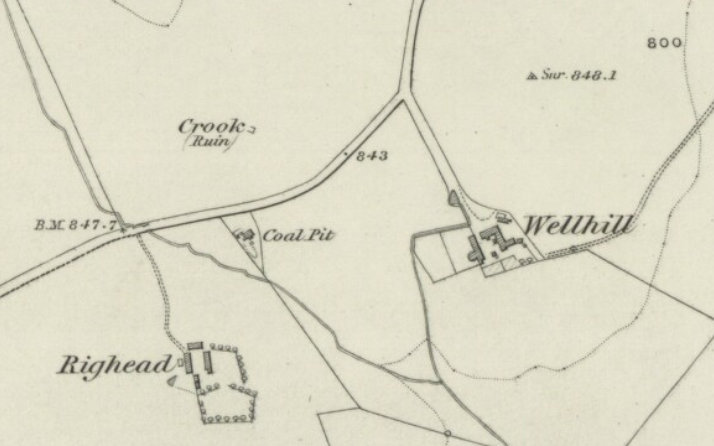
- Ayrshire, Sheet XLI (includes: New Cumnock; Ochiltree; Old Cumnock) Survey date: 1857 Publication date: 1860
- Reproduced with the permission of the National Library of Scotland
After labouring for some years on the he left the plough went to the University of Glasgow to study medicine. His university records show that the he graduated as a Doctor in Medicine (M.D.) in 1831 and as a Master of Surgery (C. M.) five years later [1]. In between times he practiced medicine at Catrine, some 10 miles north-west of New Cumnock.
Army Service
Now 29 years old, John entered service as an assistant surgeon with the Indian Medical Service (IMS) at Madras on 14th February 1836 and was promoted to surgeon on 29th October 1852 [2]. The year before he had been living at Dundas Street, Edinburgh as a lodger at the home of Robert Cockburn, Master Coal Dealer while Arthur’s occupation in the Census 1851 is given as Physician Glasgow, Indian Army.
On the 10th May 1857 mutiny of some Indian soldiers (sepoys) at the garrison town of Meertut some 40 miles north of Delhi sparked off what became known as the Indian Mutiny or Rebellion (1857-1859). By the end of June the rebel forces were laying siege to the British Residency at Lucknow.
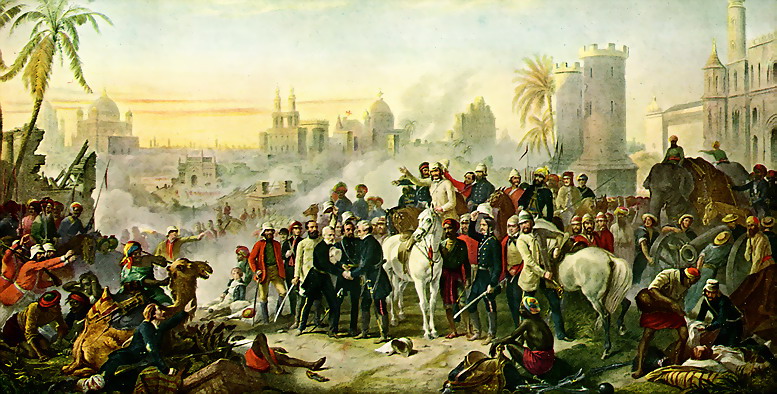
Surgeon John Findlay Arthur served with the 1st Madras Fusiliers as part of the 1st Relief Force and then again in the siege and capture of Lucknow in March of the following year. John retired from the service with the rank of Surgeon-Major on 29th February 1860.
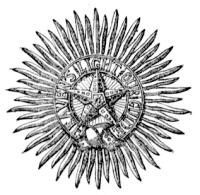
The following year Queen Victoria issued the following proclamation
“The Queen, being desirous of affording to the Princes, Chiefs and People of the Indian Empire, a public and signal testimony of Her regard, by the Institution of an Order of knighthood, whereby Her resolution to take upon Herself the Government of the Territories in India may be commemorated, and by which Her Majesty may be enabled to reward conspicuous merit and loyalty, has been graciously pleased, by Letters Patent under the Great Seal of the United Kingdom of Great Britain and Ireland, to institute, erect, constitute, and create, an Order of Knighthood, to be known by, and have for ever hereafter, the name, style, and designation, of “The Most Exalted Order of the Star of India” [4] .
The Order includes members of three classes Knight Grand Commander (GCSI), Knight Commander (KCSI) and Companion (CSI). In June 1869, John Findlay Arthur’s service in India was recognised with the honour of ‘The Most Exalted Order of the Star of India’, CSI.
He was probably living in Edinburgh at that time. At the time of the 1871 Census he was a lodger living at Moray Place, his occupation status recorded as ‘M.D. & M.C. Surgeon Retired, Madras Army’
By 1875, John Findlay Arthur C.S.I. had returned to New Cumnock and was living at Lochside House, then owned by the Marquis of Bute and previously used as a shooting lodge.

Later as a tenant of Lochside House he acquired the associated offices which were also home to his domestic servants, coachman and gamekeeper. It was at Lochside House that he died on 26th July 1886, aged 79 years and he lies in the family plot in the Auld Kirkyard.
Acknowledgements
[1] University of Glasgow Graduate Record
Graduate Records of the University of Glasgow (1727-1897) | page 24)
A Roll of the Graduates of the University of Glasgow (1727-1897)
[2] Roll of the Indian Medical Service 1615-1930 Volume 2 (1800-1930). Lieutenant-Colonel D. G. Crawford, 1930
Roll of Indian Medical Service, Volume 2
[3] The Relief of Lucknow,” by Thomas J. Barker; a print from c.1914 http://www.columbia.edu/itc/mealac/pritchett/00routesdata/1800_1899/1857revolt/lucknowsiege/lucknowsiege.html
[4] Saturday 29 June 1861, Illustrated London News, London, England
- http://maps.nls.uk/index.html
- All maps reproduced with the permission of the National Library of Scotland
Scotland’s People
- https://www.scotlandspeople.gov.uk
- Old Parish Records, Births, Marriages, Deaths, Census Records, Valuations Rolls, Wills & Testaments
 NEW CUMNOCK HERITAGE