
Established Church of Scotland
In 1650 the parish of Cumnock was divided into the two new parishes of Old Cumnock and New Cumnock. The parish of Old Cumnock was served by the existing, or old, church which stood at the heart of the clachan of Cumnock, now the town of Cumnock. Meanwhile the parish of New Cumnock was served by a new church, to be built on the castle hill adjacent to the site of Cumnock Castle (one time the seat of the Barons of Cumnock) at the heart of what is now the town of New Cumnock. The new church was completed in 1659, the year after Oliver Cromwell died and the year before the Restoration of Charles II. The Earl of Dumfries also enjoyed the title of Baron of Cumnock and was not too happy about having to pay for two ministers and two churches and had the division annulled in 1681 requiring the ‘parishioners of New Cumnock’ to return to the ‘Old Church’. The decision was reversed in 1692, and the parishes of Old Cumnock and New Cumnock were reinstated revived, thank goodness!!
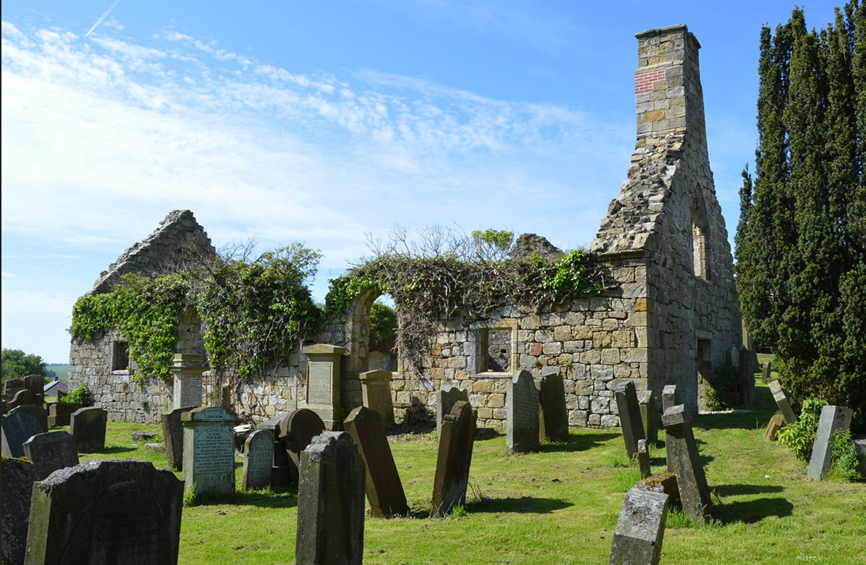
The Auld Kirkyard served as the graveyard, not all burials supported with a headstone and of course many headstones have suffered through time. The family lair of James Murdoch & Ann Fleming sits at the west end of the kirk, close to the original door into the kirk. The headstone was erected by his son John Murdoch and the lair also serves for the family of John and Elizabeth Kerr.
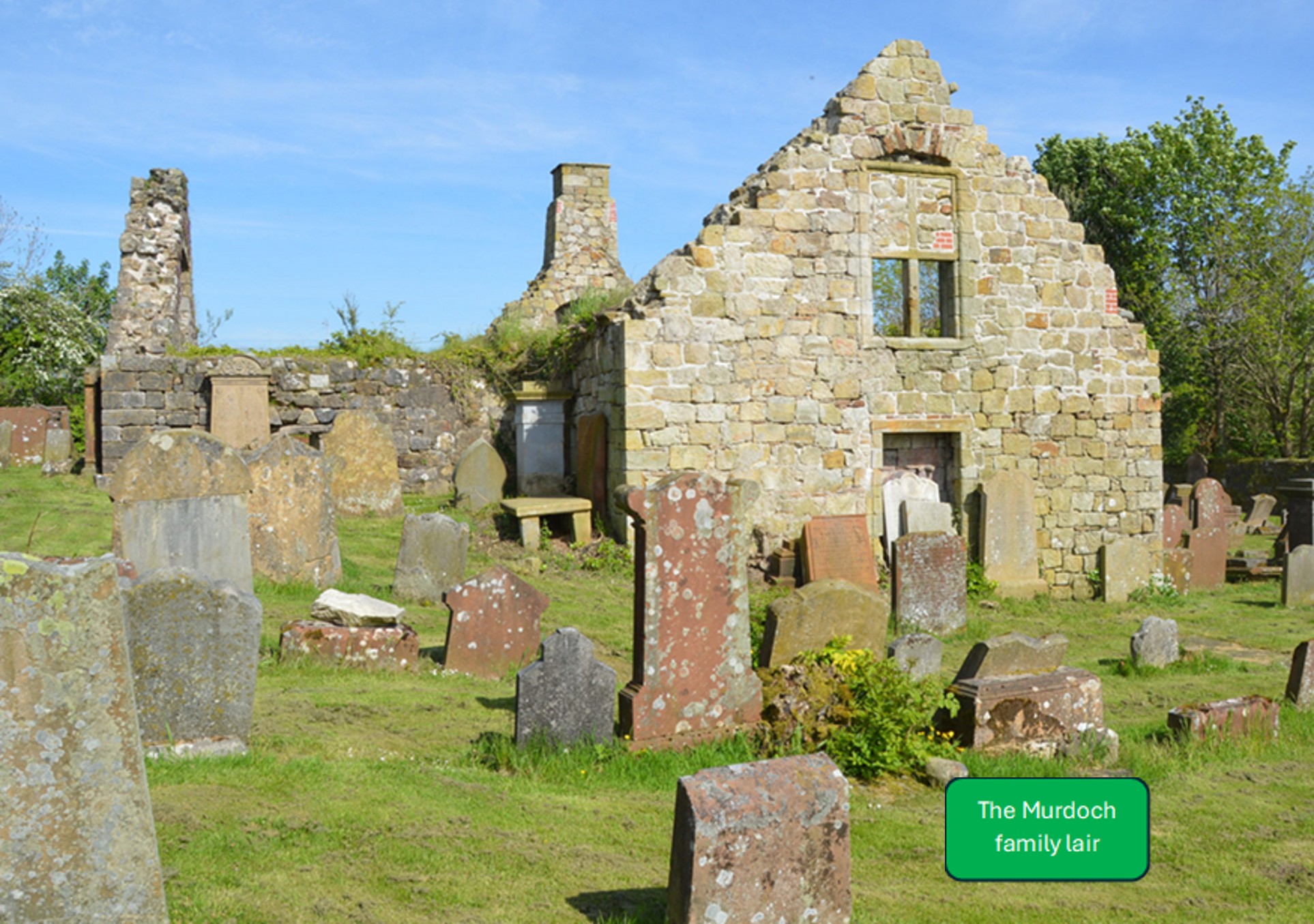
Phyll Parish photos

Photographs 2025

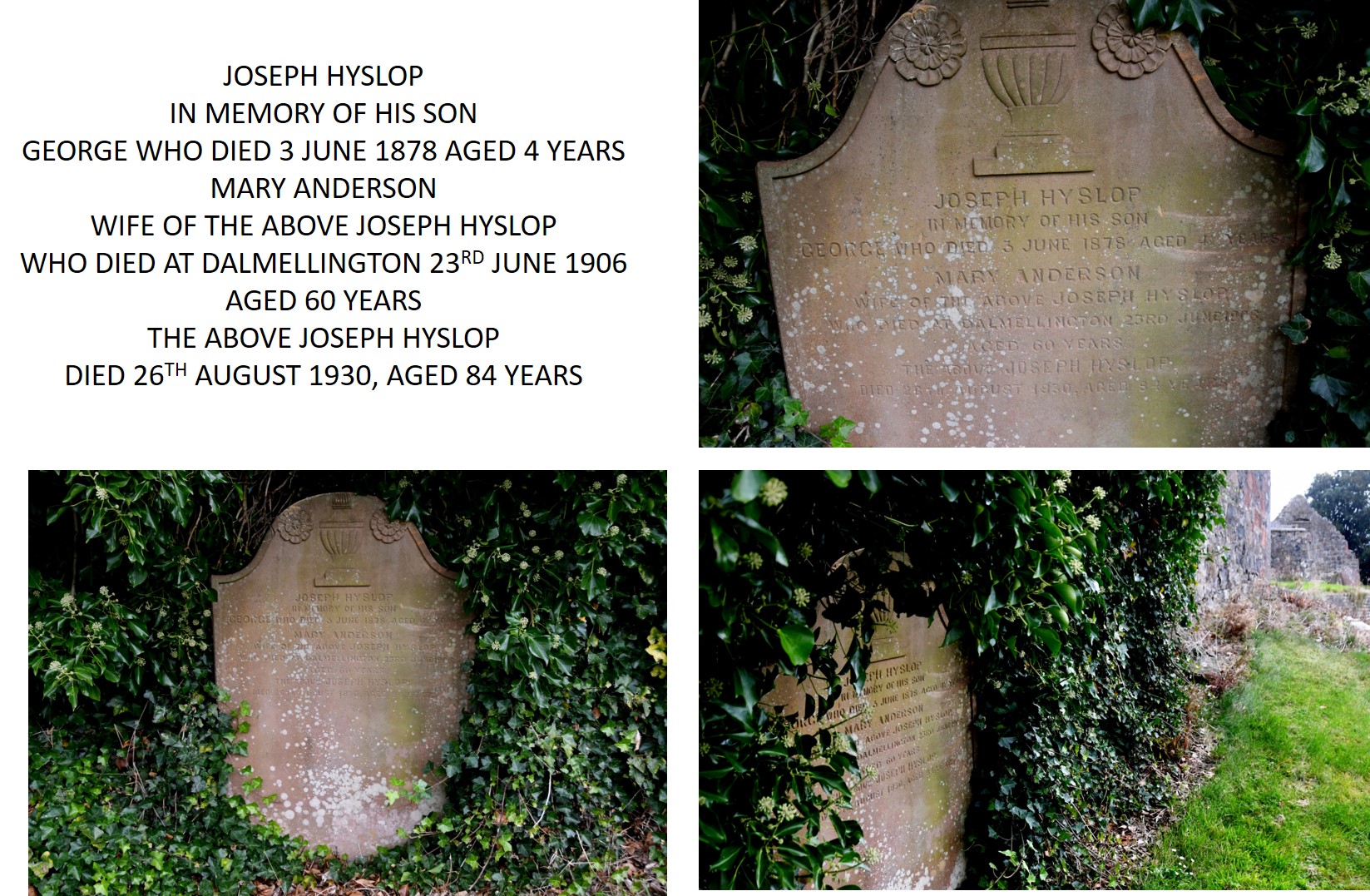
Joseph Hyslop (son of Agness Murdoch and George Hyslop) & Mary Anderson
In 1832 a new Parish Church was built some 250 yards south of, what would now be known as the Auld Kirk, and still serves the parish of New Cumnock to this day.

In 1903 the Afton Cemetery was opened about 3/4 mile from thrAuld Kirkyard on the road up through Glen Afton. Of course the family lairs in the Auld Kirkyard continued to be used for many years.
Free Church of Scotland:
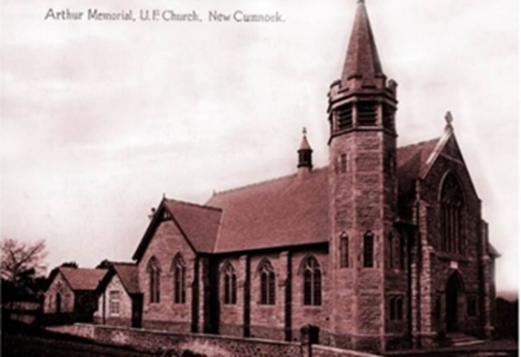
Several references to the Free Church of Scotland in various parished are encountered in the family history of the Murdochs – e.g. marriages . These churches have their roots in the turmoil within the Church of Scotland resulting in the Disruption of 1843 where some 450 ministers broke away from the Established Church, including the minister of New Cumnock, to form the Free Church of Scotland. The Free Church and manse were built on the Castlehill adjacent to the grounds of the Auld Kirk and in 1900 it served as the United Free Church.
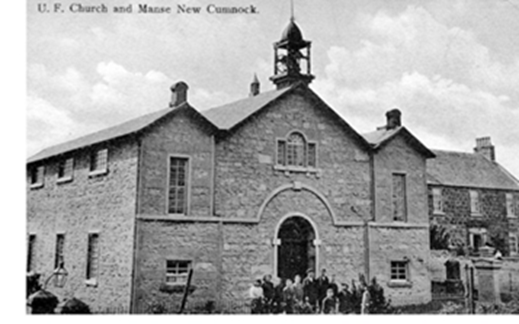
In 1912 this church was demolished and replaced with the Arthur Memorial United Free Church, named after local farmer and benefactor, William Arthur, which continued in use until the late 1970s and eventually demolished in 2015.
Reformed Presbyterian Church
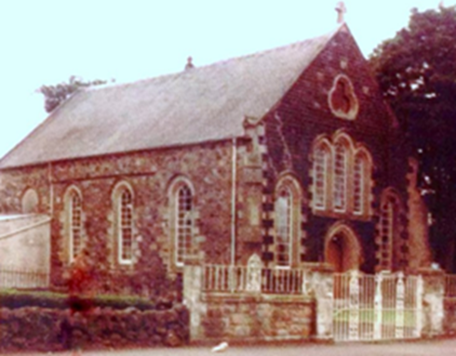
In the late 18th Century there was a small number of dissenters from the Established Church. The numbers slowly increased, and a small meeting place was built at Afton Bridgend c. 1809. By 1866 the Congregation had continued to increase and a fine new church with seating for 300 and an adjoining manse were built. In 1876 it joined the Free Church and was known as the Afton Free Church and in 1900 as the Afton United Free Church.

 NEW CUMNOCK HERITAGE