Afton Hotel and the Auld Kirkyard

I. ANDREW GIBSON (1793-?):  Surgeon

Andrew Gibson, surgeon, was one of seven professional persons in New Cumnock listed in the Ayrshire Directory of 1837, the others being the school master, four teachers and a physician. Andrew lived with his wife Ann Kennedy at Nithbridgend on the north bank of the River Nith.

Nithbridgend | Reproduced with the permission of the National Library of Scotland


His eldest son William Kennedy Gibson was a druggist master while his son Andrew Gibson began his working life as a railway clerk at New Cumnock before moving to Glasgow as a shipping clerk. He and his family moved to Belfast where he worked as an agent for the Cunard Steamship Company. A great collector of books and he later became the Governor of the Linenhall Library, renowned for its collections of the works of Robert Burns.
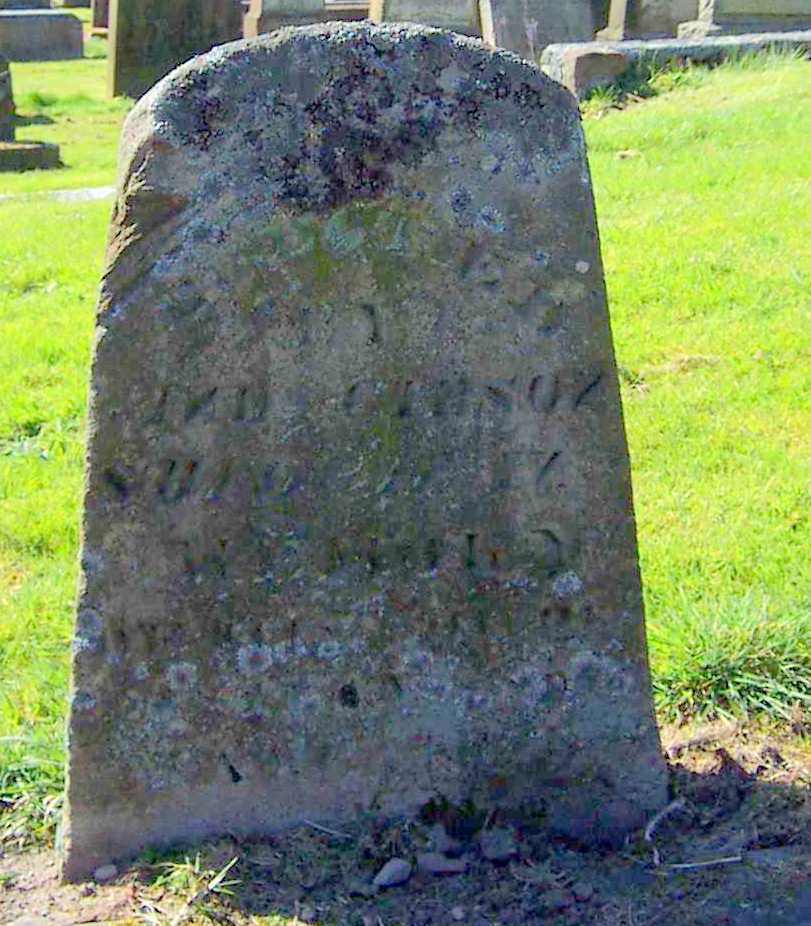
Andrew Gibson, surgeon

A small headstone was erected by ‘Andrew Gibson, surgeon’ in memory of his children Jean and Margaret.

On the rear of the stone are found the initials A.K. and H.C. , presumably those of his wife’s parents, namely Alex Kennedy and Helen Currie.

Sadly the stone has since been fractured and it can only be assumed that Andrew Gibson and his wife Ann Kennedy were later buried in this lair.

The Kennedy family lair lies adjacent to this stone.

II. ANDREW GIBSON (1825- 1879):  Grocer & Spirit Dealer

Andrew Gibson, the third son of the surgeon,  was born on 10th July 1825 at Nith Bridgend. As a young man he moved away from the parish and in 1853 he married Margaret Brown of Langholm and it was here in the same year that daughter Grace was born.  The family returned briefly to New Cumnock where daughter Annie (1855) was born.  Back on their travels Andrew later worked as a grocer in  Coylton, and it was here that daughter Margaret (1857) was born.

craigbank1
Craigbank : Nithbridgend | Reproduced with the permission of the National Library of Scotland

The family returned to New Cumnock where by 1859 Andrew had established himself as a grocer and spirit dealer in the miners rows at Craigbank, on the Front Row. Here three more daughters Elizabeth (1859), Ann (1870) and Agnes (1871) long with three sons, Andrew (1862), John (1864) and William (1867) – sadly their first born daughter Annie, died of fever in 1867.
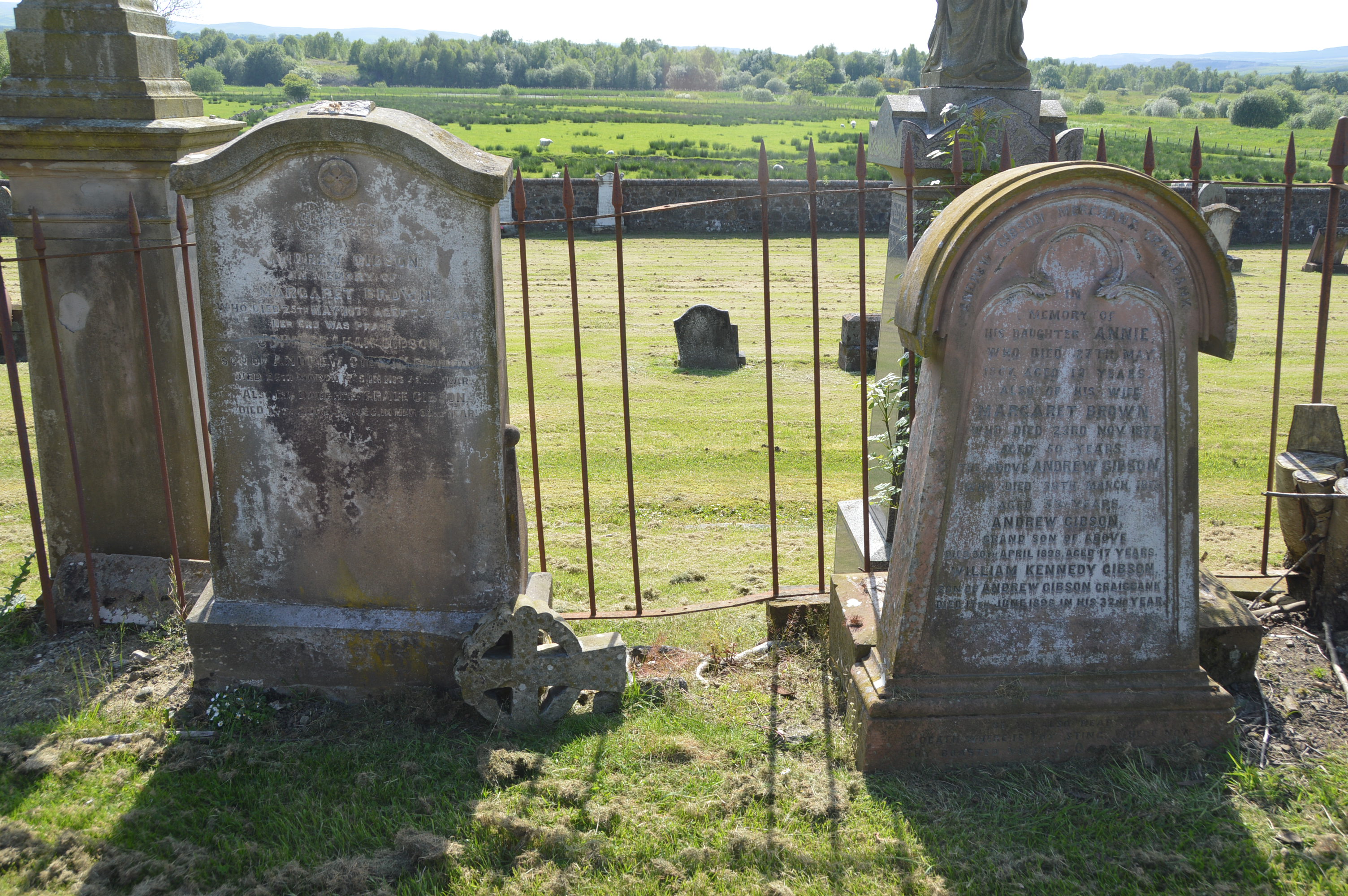
Gibson Family Lairs
Gibson Family Lairs

His wife Margaret passed away in 1877 and Andrew two years later. They lie together in the Auld Kirkyard with daughter Annie, son William and grandson Andrew. In the adjacent plot lies son John, daughter Grace and aunt Margaret Brown who worked as a barmaid in the Gibson’s public house at Craigbank.

Daughter Margaret Gibson married William Hyslop, Laird of Afton and Bank, the driving force of New Cumnock Collieries Limited and landlord of the miners rows at Craigbank.  Both of them lie together in Hyslop Lair in the Auld Kirkyard.

HUGH ROSS (1855-1899) :  Grocer & Spirit Dealer

In the 1881 census we find Hugh Ross, the son of a farmer from Wallaceton, Auchinleck living in lodgings at the Bank Glen Cottage and working as a grocer and provision merchant. Meanwhile at 59 Front Row, Craigbank is spirit merchant William Lind and his wife Marion along with their children, including Agnes Robertson , Marion’s daughter from her first marriage to the late Robert Robertson.

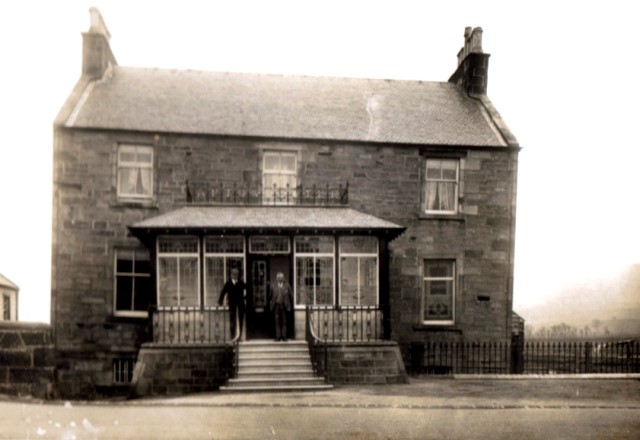
Afton Hotel and Nith Bridge

The following year Hugh Ross married Agnes Robertson and and was now living at Craigbank, the tenant of the properties ( house, shop and public house) owned by the Trustees of Andrew Gibson.

The Trustees of Andrew Gibson also owned the Gibson Nith Bridgend properties with the house now licensed as a hotel known as the Afton Hotel and next door lodgings  Although the hotel sat at the Nith bridge, the name Afton and its association with Robert Burns was a stronger marketing brand. In 1885 the Valuation Rolls, record that John Ross is the tenant (presumably a relative of Hugh Ross) although four years later when it was put up for sale, Hugh Ross is identified as the occupier.

AFTON HOTEL, NEW CUMNOCK
FOR SALE BY PRIVATE BARGAIN

The Afton Hotel, New Cumnock belonging to the Trust Estate of the late Mr Andrew Gibson and as presently occupied by Hugh Ross . The House has long been licensed, and is well situated, being near the Railway Station. The property is held on a 99 years lease which expires on Whitsunday 1930. Tack-duty 13s 6d. Entry at Whitsunday first. For further particulars apply to A. Brakenridge, Solicitor, Cumnock who will receive offers up to Saturday, 9th March. The Highest or any Offer, may not be accepted. Cumnock, 25th February 1889.

Glasgow Herald, Friday 1st March, 1889

In March 1890, Hugh Ross’s young wife Agnes passed away and in the Census of the following year he is at Craigbank with his young children Elizabeth (6), William (5), step-daughter Minnie Robertson (12) along with sister-in-law Margaret Lind (19)

In 1895 Hugh Ross married Margaret Hastie in the Royal Hotel, Kilmarnock. He was now the proprietor of the former Gibson properties both at Craigbank, (where he lived with his family) and the Afton Hotel where William Lind (his father-in-law) was now the tenant.

Hugh and Margaret’s first born, a son Hugh died in infancy in 1896 and another son James was born two years later. Archibald was born in early October 1899, only for Hugh to die of double pneumonia before the end of the month.

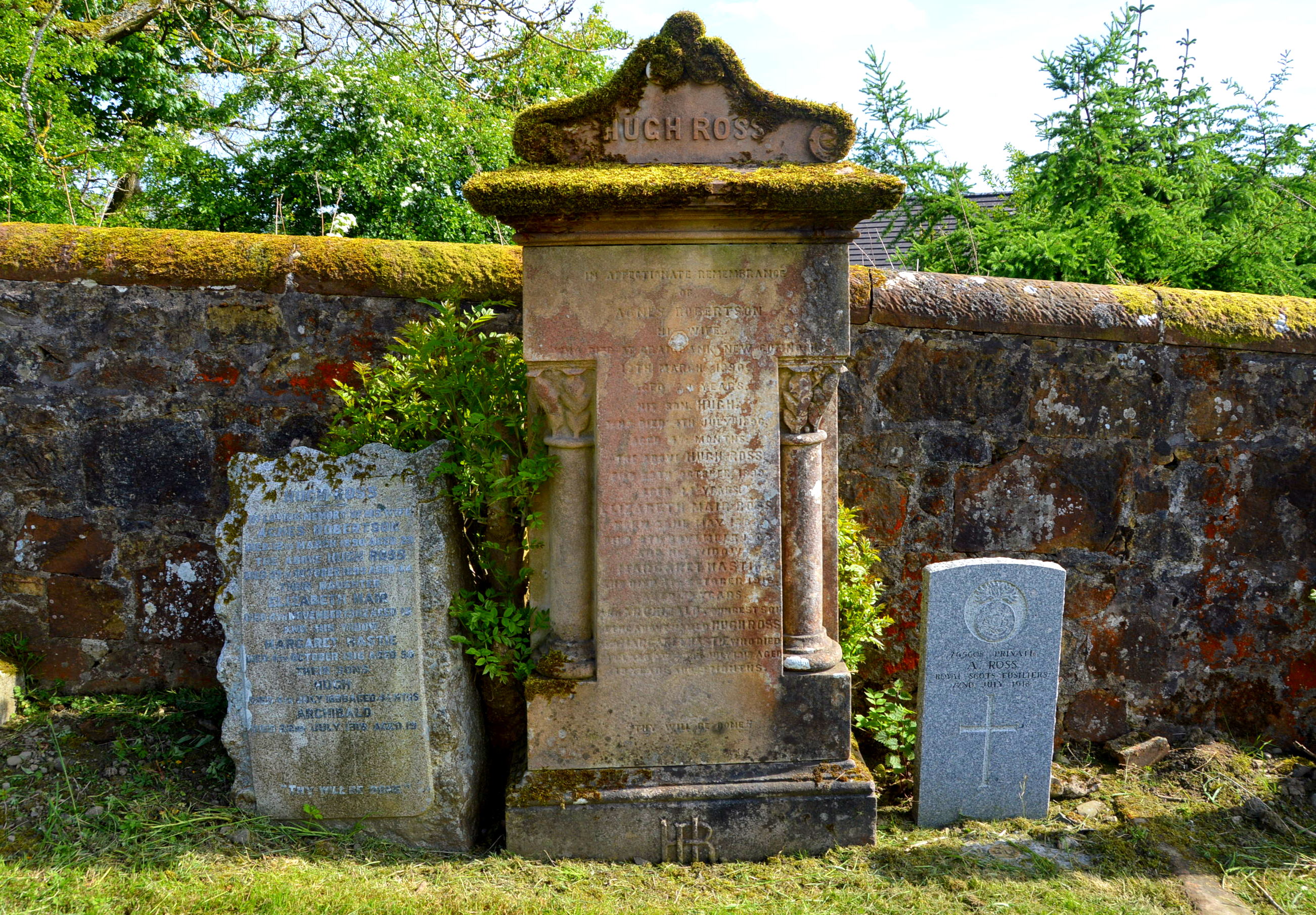
Margaret and her two sons moved to Cathcart, Glasgow, she passed away in 1916, aged 50 years. Archibald served with the Royal Scots Fusiliers in the Great War and in 1918, at the age of 19 he died of pneumonia in the Victoria Infirmary, Glasgow.
Ross Family Lair
Ross Family Lair

The Ross family plot lies against the far wall of the Auld Kirkyard with the original grand sandstone headstone now badly weathered and which has since been replaced with a new stone on the left. Hugh, his two spouses Agnes and Margaret and children Hugh, Elizabeth and Archibald all are remembered on the stone. To the right stands the war grave of Private Archibald Ross.

JOHN  LOCKHART (1837-1890) Hotel-keeper

DSC_0260
Obelisk to John Lockhart , Afton Hotel

When the Afton Hotel went on the market in 1889, it’s not clear if any offers were accepted at that time, although by 1895 Hugh Ross was the proprietor.

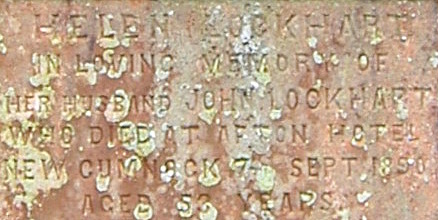
In 1890, John Lockhart was the hotel-keeper at the Afton Hotel. Originally a journey man stone mason from Lesmahagow he married Helen Wilson in 1856, a dairy maid from Benston, Dalrymple.

The family spent many years in Perthshire and Stirlingshire with John now working as a gamekeeper. It’s not known exactly when the Lockharts arrived in New Cumnock either as owners and / or tenants of the Afton Hotel, but John died in September 1890 whilst hotel-keeper there.
Lockhart_AftonHotel03

In the census of the following year Helen Lockhart, hotel-keeper and her daughters  Jane (27) and Ness (26) – a school teacher -are living at the hotel. A son David died at Dalrymple that year and three years later Jane passed away. By 1901, Helen Lockhart is living in Eastwood.

WILLIAM LIND (1846- 1920) : grocer, spirit-merchant, hotel keeper

As discussed above, in 1895 William Lind (father-in-law of Hugh Ross), was tenant and hotel keeper at the Afton Hotel. William was born in 1846 at West Calder and as young man worked as a grocer’s assistant to his brother John, before running his own shop in the village and then in the 1880s’ moving to Craigbank.

Courtesy of National Library of Scotland
Afton Hotel | Reproduced with the permission of the National Library of Scotland

In the 1901 Census William (54), now a widower and his children Marion (32), Isabella (31), Janet (25), Robert (21) and several grandchildren are resident in the Afton Hotel.  He later married Janet Millar and was proprietor and tenant of the Afton Hotel until his death in 1920, aged 75 years.

Afton Hotel: Photo courtesy of Donald McIver

The Afton Hotel remained in the hands of the Lind family for many years . Sadly soon after it changed hands it was consumed by fire in January 1963 and so badly damaged that it had to be demolished.
My Collier laddie

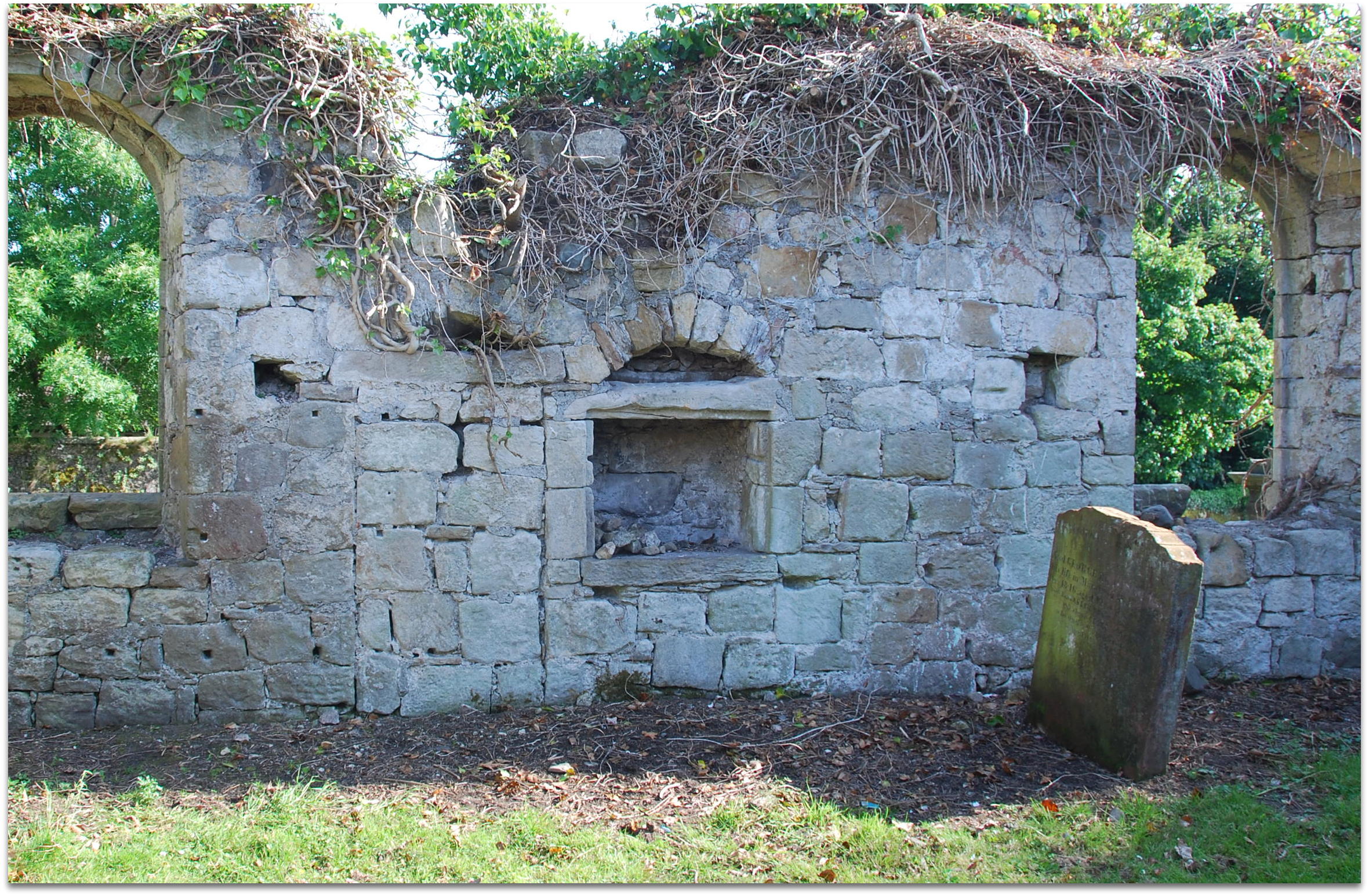
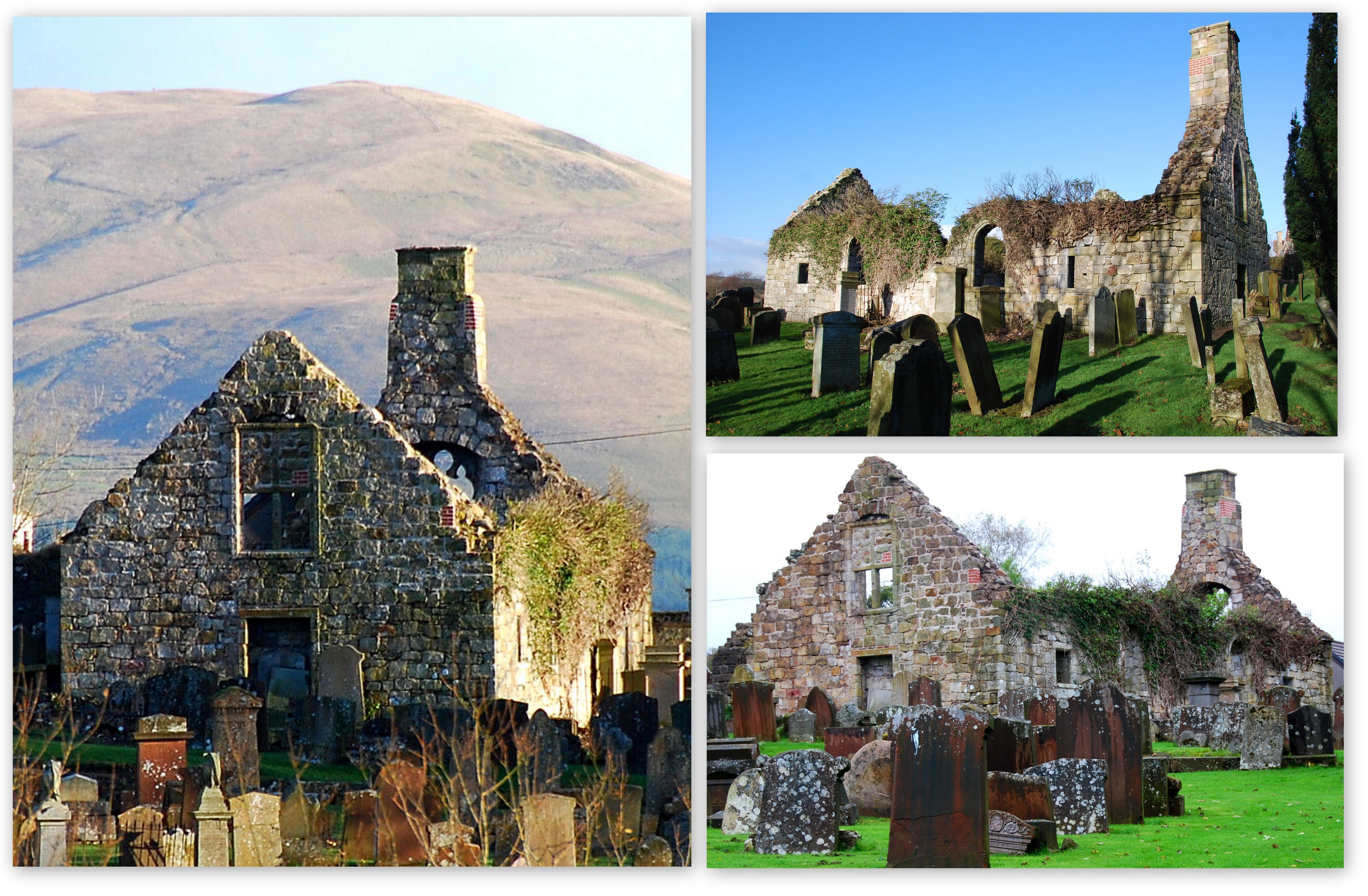
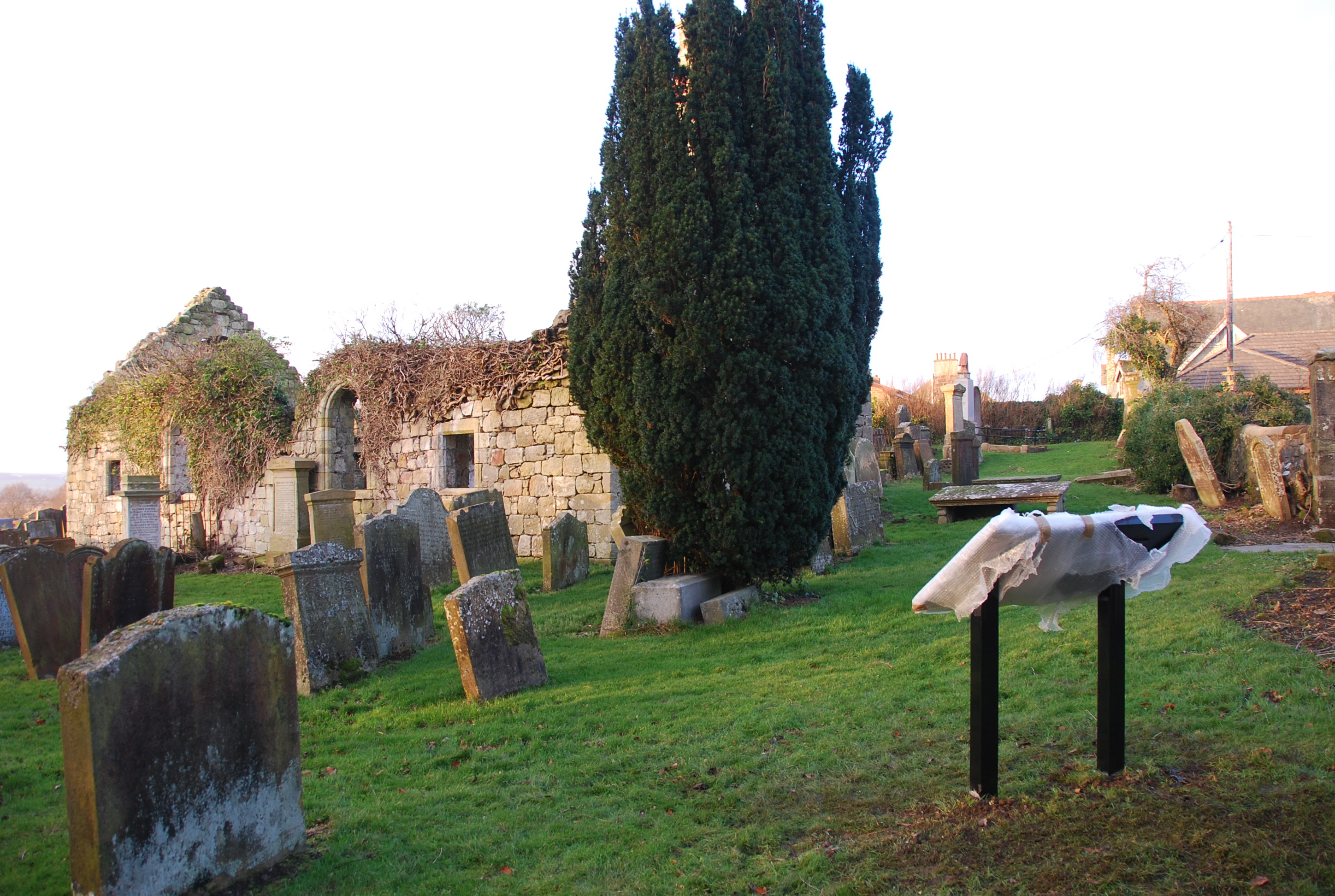
In 1833 a new parish church was erected to serve the growing population of New Cumnock and the original church ceased to function in that role and then quickly as the Auld Kirk it soon fell into ruin. The kirkyard continued to be the final resting place of parishioners for some considerable time after and with space at a premium, the ground within the walls of the Auld Kirk was put to good use.

Headstones within the Auld Kirk walls

Headstones within the Auld Kirk walls

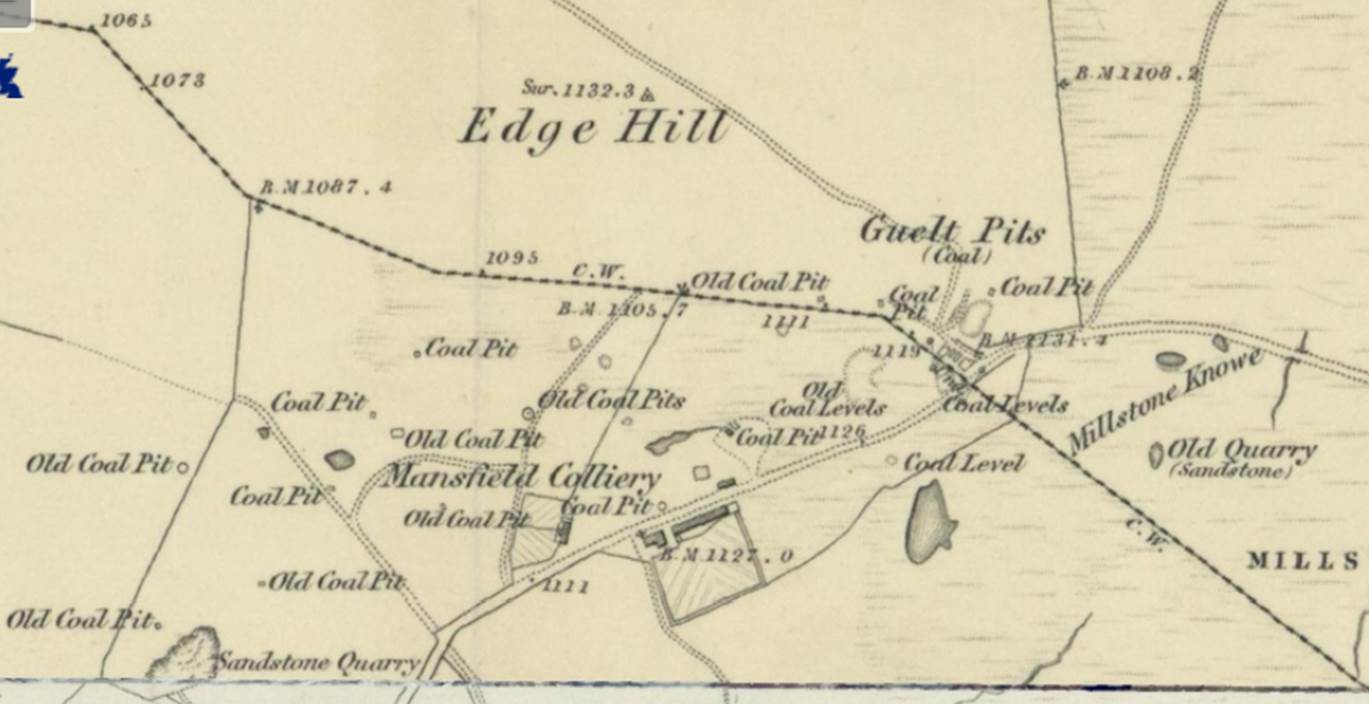
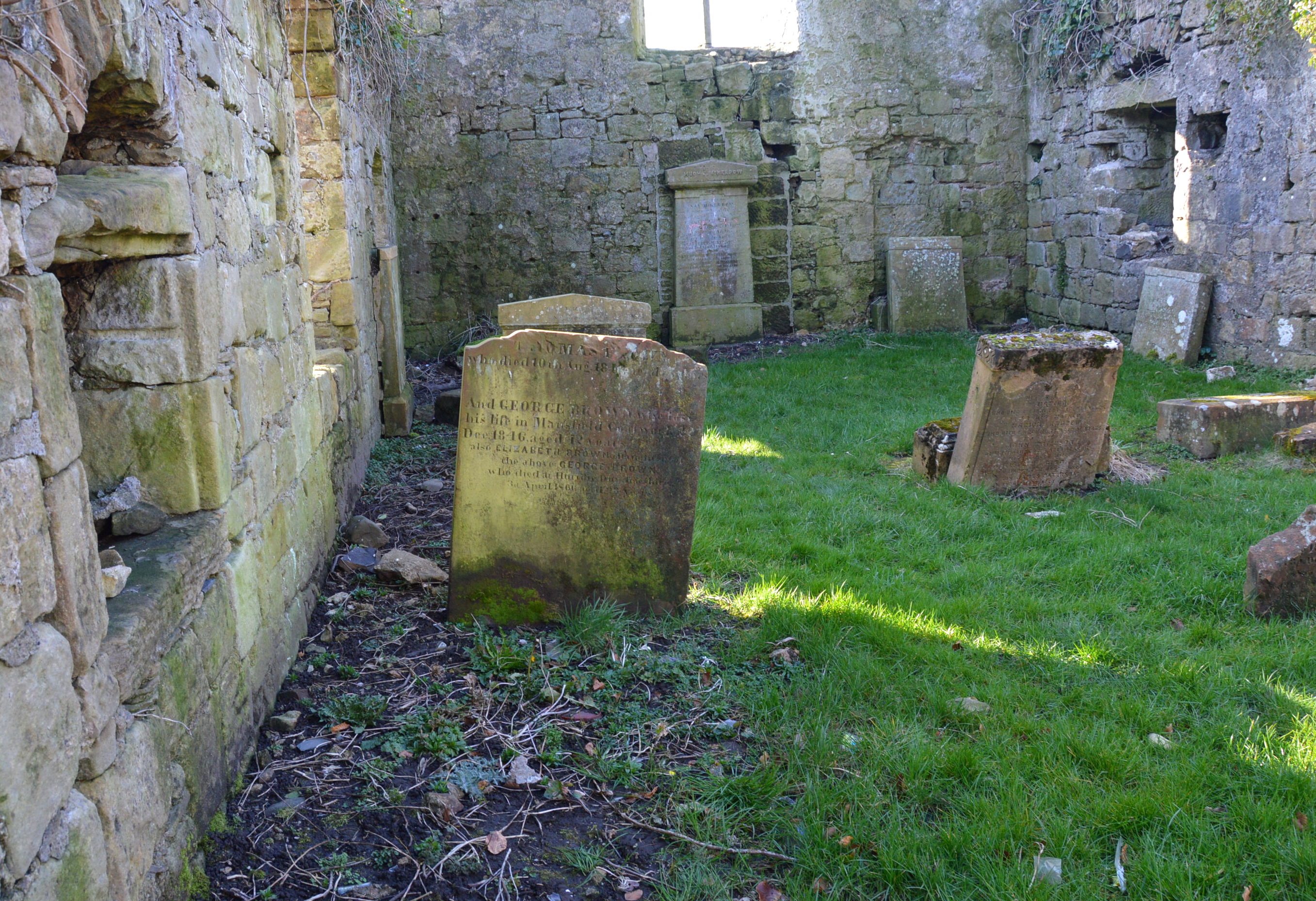
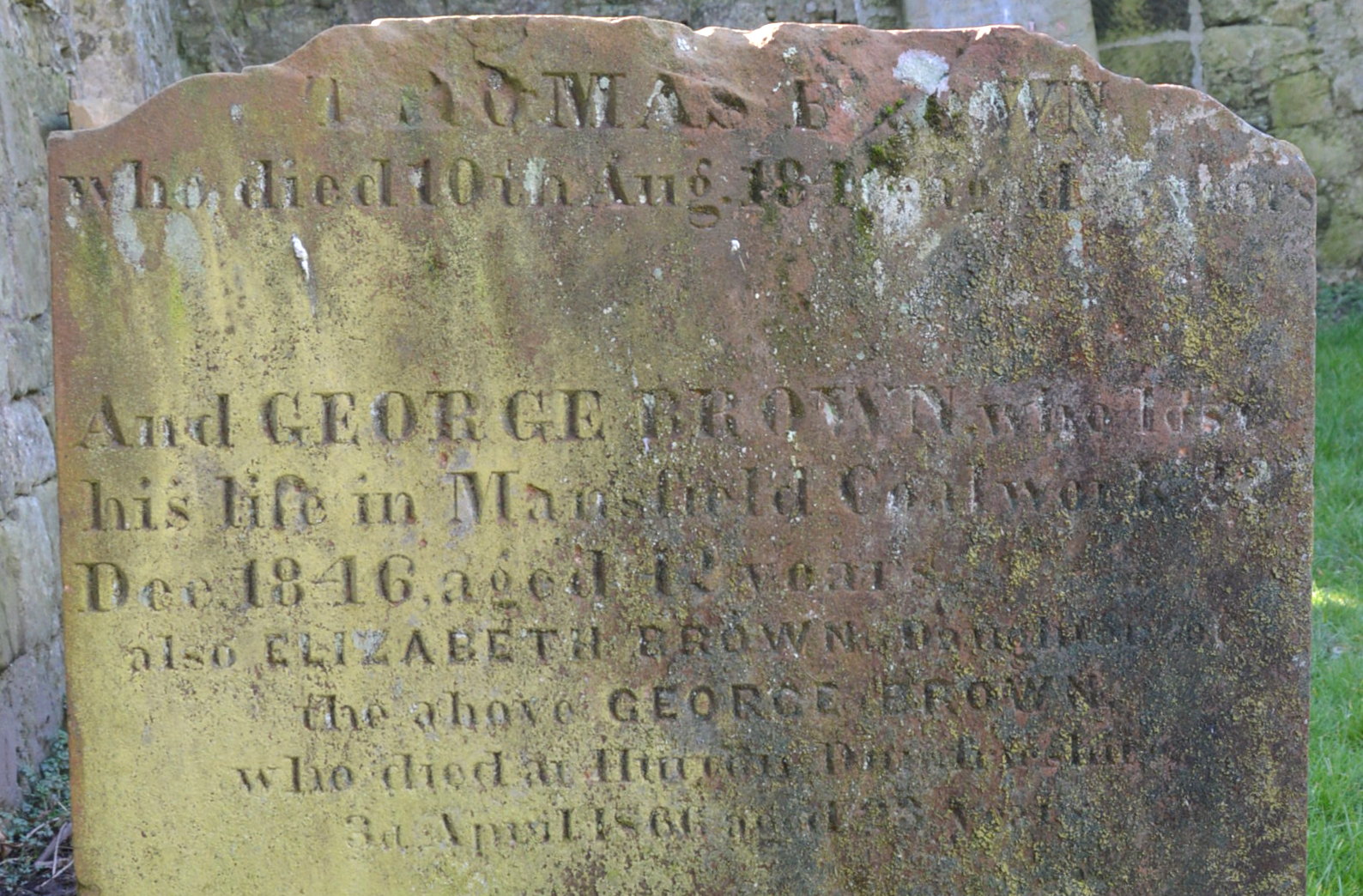
One of the headstones within the ruin is that of George Brown, who in December 1846 ‘lost his life in the Mansfield Coalworks‘. Although the early coal barons had been working the coal measures across the parish of New Cumnock since the late 18th century George Brown’s death is thus far the earliest recorded mining fatality in the parish that has been found.

Three generations of the Brown Family - Thomas, George and Elizabeth

Three generations of the Brown Family – Thomas, George and Elizabeth

Fatal Accident – New Cumnock, 22d Dec 1846 –

At Mansfield Colliery, in the neighbourhood of New Cumnock, this day, one of the workmen, named George Brown, was in the act of undermining that portion of the seam he meant to take down for the day’s “dark,” when it unexpectedly gave way, and crushed the unfortunate man to eternity in a moment. The deceased was a sober, inoffensive, individual, and in the prime of life. He has left a wife and small family to lament their irreparable loss. [Dumfries and Galloway Standard 23 December 1846]

Kind permission of National Library of Scotland (Ordnance Survey 1843-1882)

Kind permission of National Library of Scotland (Ordnance Survey 1843-1882)

In the 1841 Census, George (30) ,his wife Margaret Millar (25) are found at Mounthope. a mile of so to the south of Mansfield Colliery with their New Cumnock born children Thomas (5), John Millar (3) & William (1).  A year later, a daughter Elizabeth was born and three years after that another daughter, Jean saw the light of day at Mounthope.

At this time George is working as a Tile Manufacturer, likely at the clay pits in the Mansfield land , along with three other young men also living at Mounthope – John Williamson, James McGilvery and George Porter.

Five years later, he is working as a carter at Mansfield when he loses his life on 22nd December 1846, his tombstone recording that he was 42 years old, indicating he was born in 1804, which differs slightly from that of 1811 as suggested by the census information. This latter date is nearer the mark for he was born on 12th July 1810 at Perth, the son of Thomas Brown , weaver and Jean Miller.

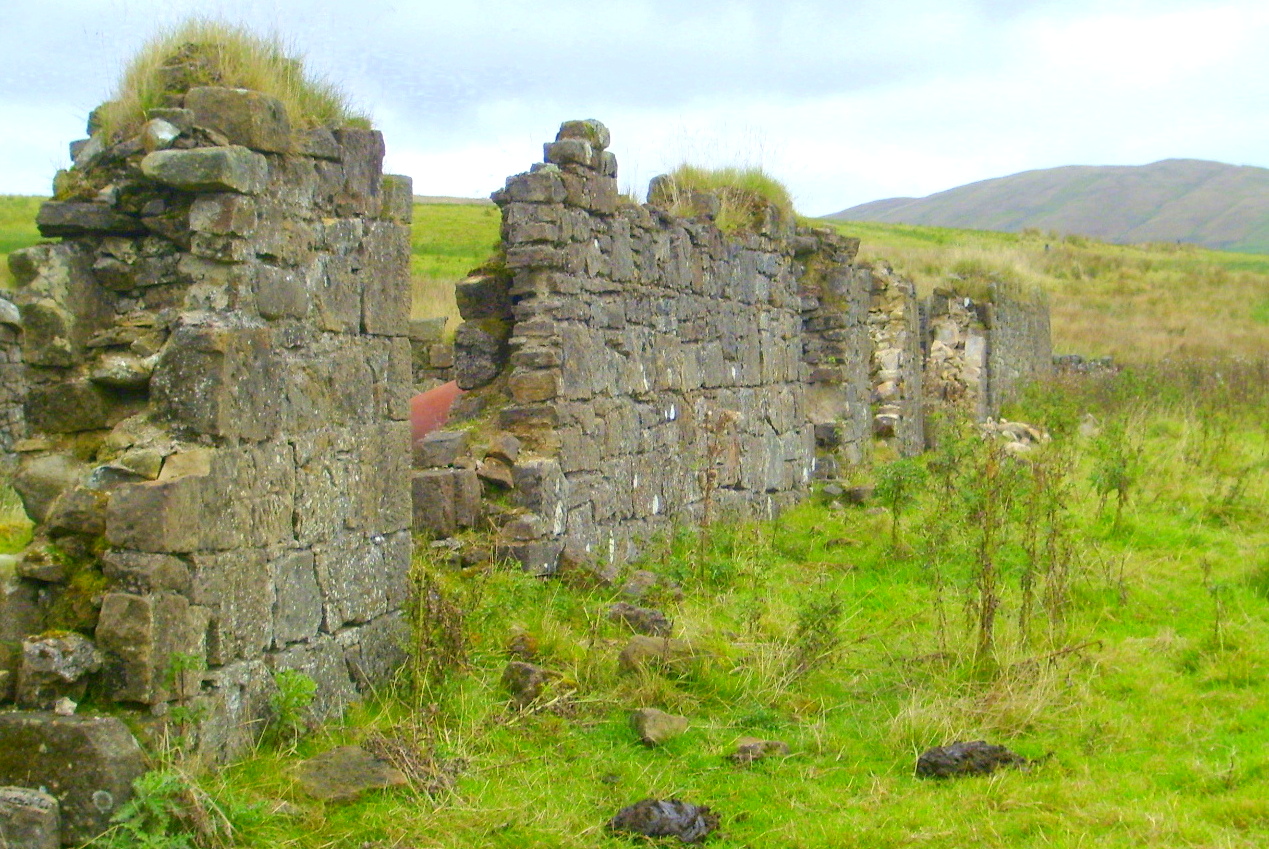
His parents moved the family to New Cumnock and in the 1841 Census Thomas (78), Jean (68) and daughter Margaret (25) are found at High Linn in the upper reaches of the Mansfield Burn, where the elderly Thomas is working as a bower. It was here in 1836 that Thomas junior had been born.

High Linn on the upper reaches of Mansfield Burn

High Linn on the upper reaches of Mansfield Burn with Corsencon Hill in the background

Thomas Brown, died on the 10th August 1846, aged 83 years and was buried within the ruins of the Auld Kirk. Four months later his son George was killed at Mansfield Colliery, aged 36 years (and not 42 years as recorded on the stone) and was laid to rest with his father, leaving behind his wife Margaret and five children aged between 1 and 10 years old. George’s daughter Elizabeth moved away from the parish and worked as a dairymaid in Hutton, Dumfriesshire. Sadly she died at the young age of 25 years old and lies here in the Auld Kirk with her father and grandfather.

Resting place of Perthshire weaver and his son an Ayrshire collier

Resting place of a Perthshire weaver and his son an Ayrshire collier

It is fitting that George Brown, the first recorded mining fatality in the parish that we know of, lies within the ruins of the Auld Kirk which  ceased to function as a church at the time New Cumnock’s transformation to a mining community took hold.

The Kirk’s Alarm and New Cumnock Connections

Robert Burns (1759 – 1796)

In 1789 Robert Burns penned ‘The Kirk of Scotland’s Garland” or “The Kirk’s Alarm” as it is better known. Inspired by the reaction of a band of Ayrshire ministers set in their old ways (Auld Lichts) to a publication by the minister at Ayr, one of many ministers now expressing much more liberal views (New Lichts).

Burns pulls no punches in the opening verse –

Orthodox! orthodox, who believe in John Knox,
Let me sound an alarm to your conscience:
A heretic blast has been blown in the West,
“That what is no sense must be nonsense,”
Orthodox! That what is no sense must be nonsense

AYR kIRK

Ayr Kirk Second Charge

Reverend William McGill (1732-1807)

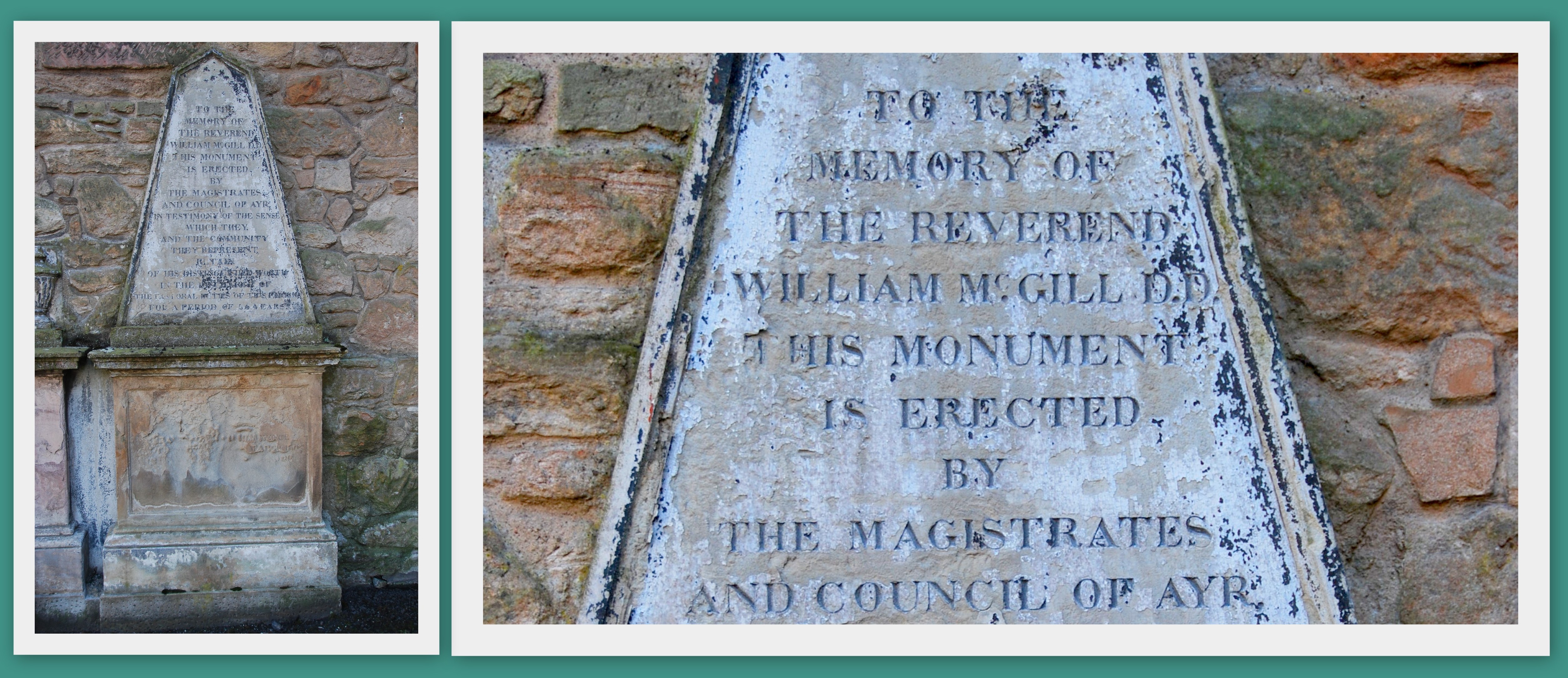
The minister at the centre of the controversy was William McGill , a friend of the bard’s father William Burnes. The son of a Wigtonshire farmer he was appointed assistant minister at Kilwinning in 1759 and the following year was ordained to the second charge of Ayr, which sits on the banks of the River Ayr.  At the age of 53 years he received a Doctorate of Divinity from the University of Glasgow.

In 1786 he published an essay ‘ The Death of Jesus Christ’ which was deemed to be at odds with the orthodox doctrines of the kirk by Dr William Peebles of Newton-on-Ayr. McGill attempted to defend his position but three years later the General Assembly ordered an inquiry and after the beleaguered minister offered an apology the case was dropped.

Rabbie mocks the punishment that should have been meted out to Dr Reverend McGill –

Doctor Mac! Doctor Mac, you should streek on a rack,
To strike evil-doers wi’ terror:
To join Faith and Sense, upon any pretence,
Was heretic, damnable error,
Doctor Mac ‘Twas heretic, damnable error.

With the sense of injustice established in the opening verses Burns turned his attentions to a number of the Auld Lichts in turn.

Reverend William McGill

Reverend William McGill

Reverend William Dalrymple (1723-1814)

The first in line was William Dalrymple.

The younger son of the Sheriff-Clerk of Ayr he was ordained minister of the second charge of Ayr in 1746 and translated to the first charge ten years later. On 26th January 1759, he baptised Robert Burns one day after his birth at Alloway.

Dalrymple received a Doctorate of Divinity from the University of St. Andrews in 1779 and two years later he was elected Moderator of the General Assembly.  He would go on to serve as minister at Ayr for 68 years.

D’rymple mild! D’rymple mild, tho’ your heart’s like a child,
And your life like the new-driven snaw,
Yet that winna save you, auld Satan must have you,
For preaching that three’s ane an’ twa,
D’rymple mild! For preaching that three’s ane an’ twa.

Rev Dalrymple

Rev Dalrymple

Ministers of Ayrshire

The verses that followed attacked the following ministers

  • John Russel (Kilmarnock) – ‘Rumble John
  • James McKinlay (Kilmarnock) – ‘Simper James
  • Alexander Moodie (Riccarton) – ‘Singet Sawnie
  • Dr William Peebles (Newton-on-Ayr) -‘Poet Willie
  • Stephen Young (Barr) – ‘Barr Steenie
  • James Young (New Cumnock) – ‘Jamie Goose
  • David Grant (Ochiltree) – ‘Davie Bluster
  • George Smith (Galston) -‘Irvine Side
  • John Shepherd (Muirkirk) -‘Muirland Jock
  • Dr. Andrew Mitchell (Monkton) – ‘Andro Gowk
  • William Auld (Mauchline) – ‘Daddy Auld

Reverend James Young (1711 – 1795)

In that band is our own Reverend James Young of New Cumnock. Born in  1711, the son of Alexander Young  a cooper in Falkirk.  He married Elizabeth Hunter, the daughter of Robert Hunter, minister of the Kirkconnel. He was called to New Cumnock on 29th December 1756 and was ordained on 3rd May 1758, the year before Burns was born.

Burn lampoons the Rev. Young as ‘Jamie Goose’ and attacks the minister for his pointless provocation of ‘hunting the wicked Lieutenant‘.  This was Hugh Mitchell of Dalleagles, a captain in the Royal Marines, who was married to Grizzel Logan, sister of John Logan of  Laight and close acquaintance of Robert Burns. The minister had refused to baptise either one or both of their children born at that time and had entered into some form of ecclesiastical prosecution against Mitchell.

Burns, also had other information on the minister as he makes reference to his father’s trade of cooper.

Jamie Goose! Jamie Goose, ye made but toom roose,
In hunting the wicked Lieutenant;
But the Doctor’s your mark, for the Lord’s holy ark,
He has cooper’d an’ ca’d a wrang pin in’t,
Jamie Goose! He has cooper’d an’ ca’d a wrang pin in’t.

The Reverend Young died on 1st Augut 1795, aged 84 years – the year before Burns died. He lies buried alongside the walls of the Auld Kirk ruins.
Reverend James Young

Reverend James Young , New Cumnock Auld Kirkyard

John Logan of Knockshinnoch and Laight

John Logan of Knockshinnoch and Laight was a close acquaintance of Burns. His marriage to Martha McAdam in March 1779 had caused some controversy. It was considered to have been irregular having been celebrated, it was was believed by an Episcopalian clergyman, not entitled to do so by law. Logan as one of the heritors in the parish of New Cumnock was also responsible for contributing to the upkeep of the kirk and he and the Reverend Young also crossed swords on this matter.

On the 7th August 1789, Robert Burns at Ellisland sent a copy of ‘The Kirk’s Alarm”  to John Logan Esq. Of Afton at Laight House, along with a letter which included the remarks –

“I am determined not to let it get into the Publick; so I send you this copy, the first I have sent to Ayrshire, except some few of the Stanzas which I have wrote off in embrio for Gavin Hamilton under the express provision and request – that you will only read it to a few of us, and do not on any account give or permit it to be taken, any copy of the Ballad.  If I could be of any Service to Dr. McGill I would do it though it should be at much greater expense than irritating a few biggoted Priests; but as I am afraid , serving him in his present embarrass , is a task too hard for me , I have enemies enow,  God knows, tho’ I do not wantonly add to that number”

Burns enclosed copy of the Kirk’s Alarm which included the following presentation stanza reiterating his request not to to give out a copy, other than too their mutual friend, William Johnston , Laird of Clackleith in Sanquhar.

Afton’s Laird ! Afton’s Laird when your pen can be spared,
A copy of this I bequeath,
On the same sicker score as I mention’d before,
To that trusty auld worthy, Clackleith,
Afton’s Laird! To that trust auld worthy, Clackleith.’

Laight Farm, New Cumnock

Laight Farm, New Cumnock

.

‘Celebration and Thanksgiving’

New Cumnock Parish Church

New Cumnock Parish Church

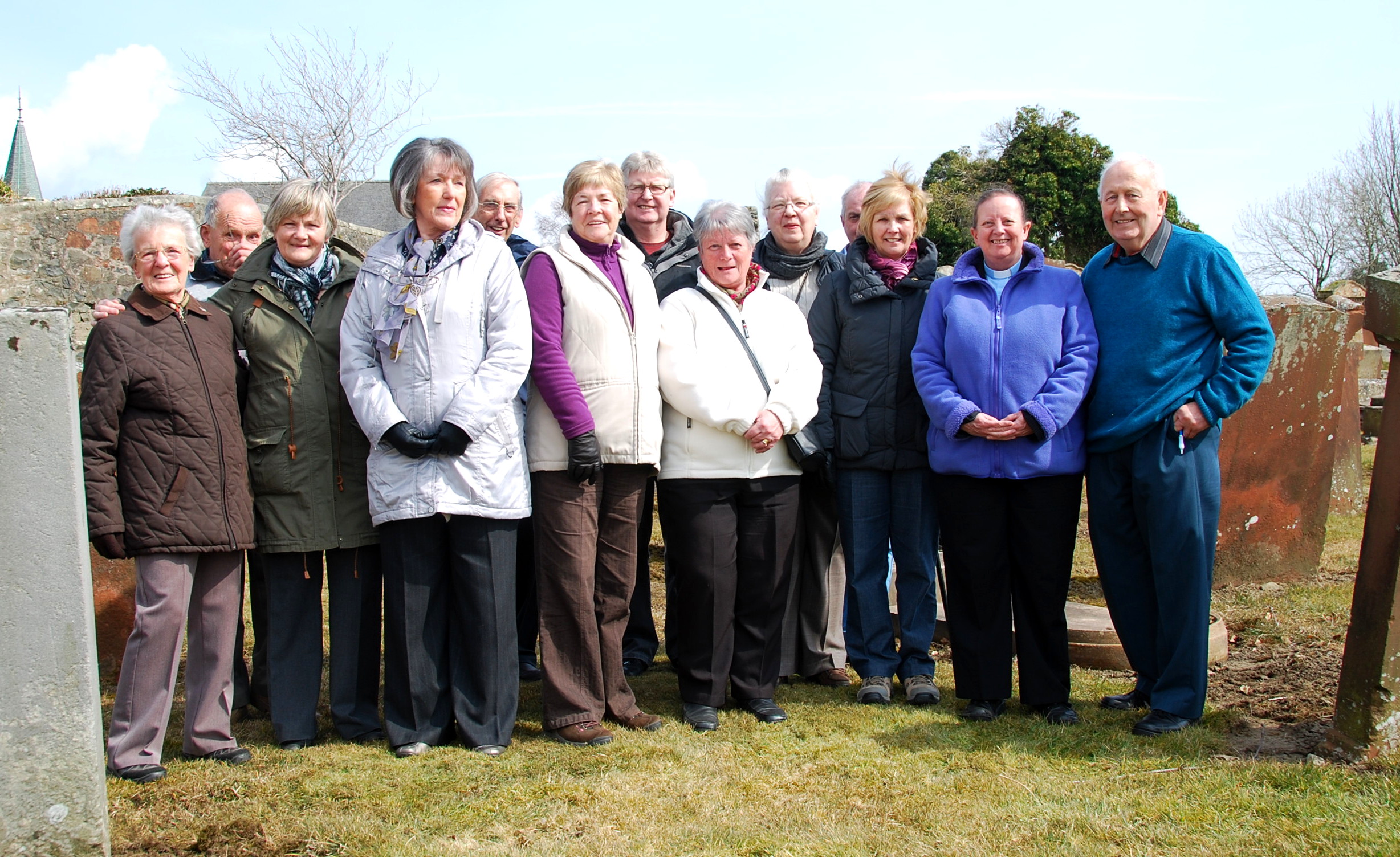
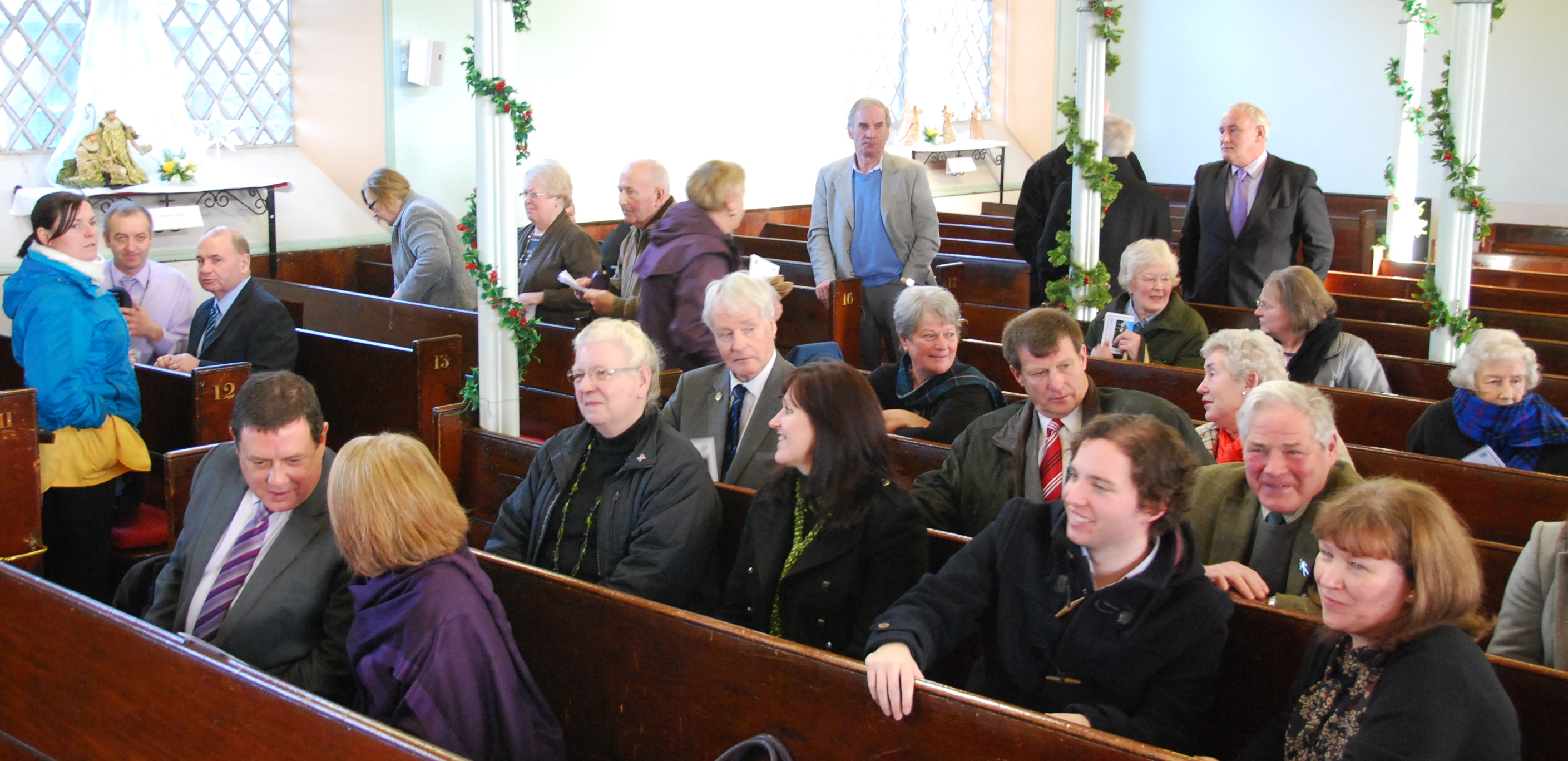
The New Cumnock Liaison Group (NCLG) held a ‘Celebration and Thanksgiving’ event in the New Cumnock Parish Church to mark the completion of major milestones in the Auld Kirk and Village Heritage trail project, which in partnership with East Ayrshire Council,  kicked off in January of this year.

Celebration and Thanksgiving Service

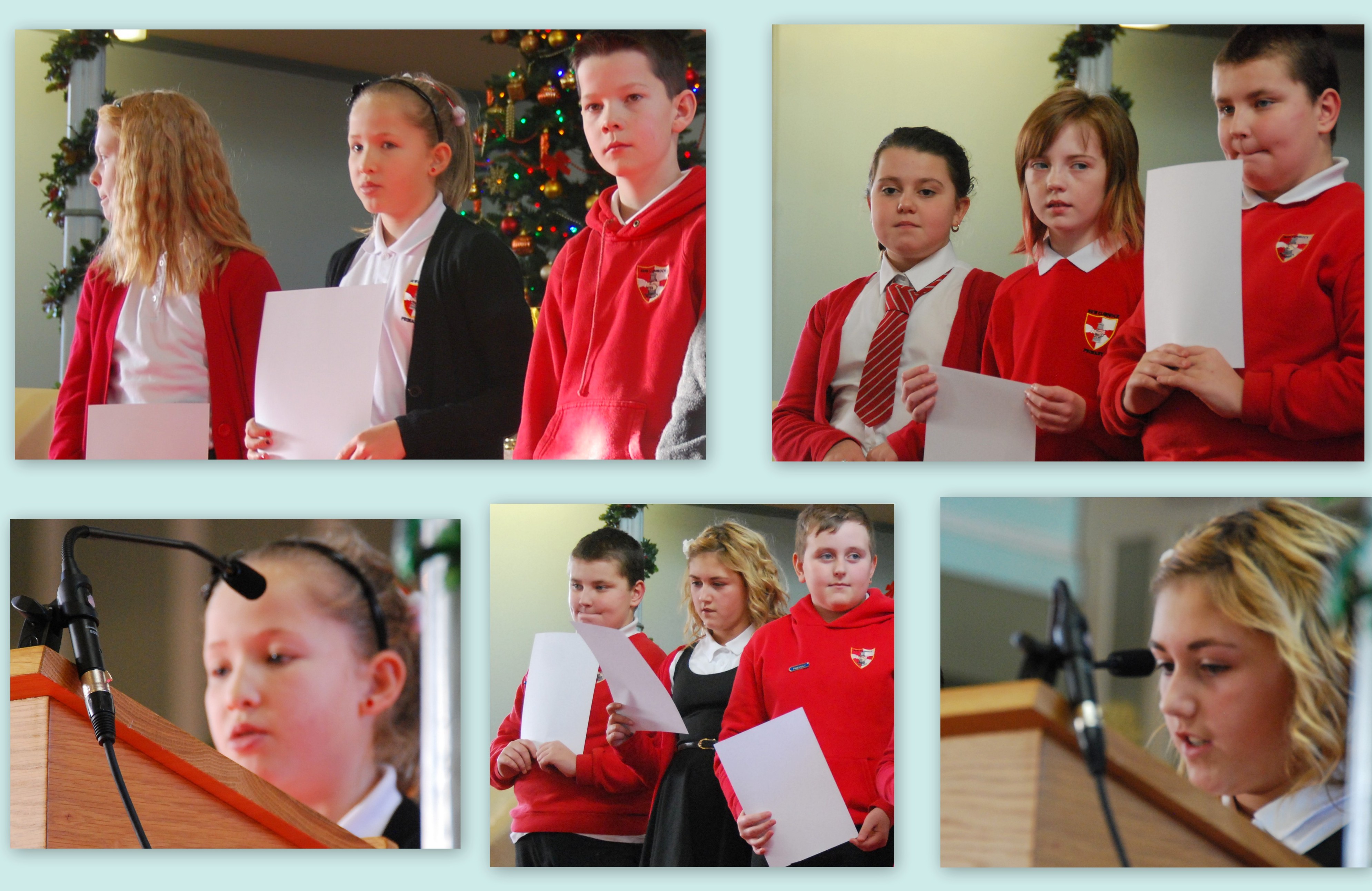
Joining members of the NCLG were, among others,  members of the Parish Church, New Cumnock History Club and Primary 6 of New Cumnock Primary School, all of whom had been involved in researching a number of family lairs found in the Auld Kirkyard.

Rev. Cuthbert

Rev. Cuthbert

The event was held in the New Cumnock Parish Church, which in 1833 assumed the role of parish church, from the Auld Kirk and the Reverend Helen Cuthbert welcomed all and admirably led us through a lively service.

“Down through the years
We will tell New Cumnock’s story
Down through the years
Keep the flame of HOPE alive”

Together, in the spirit of Christmas and in celebrating our heritage we sang ‘While Humble shepherds watched their flocks‘ one of the Scottish Paraphrases of 1781, which would have been sung in the Auld Kirk – Reverend James Young, minister at that time.

“Down through the years
We will tell New Cumnock’s story
Down through the years
Keep the flame of FAITH alive”

Responsible Citizens, Confident Individuals, Effective Contributors and Successful Learners

New Cumnock Primary School : Primary 6

New Cumnock Primary School : Primary 6

Pupils from New Cumnock Primary 6, our young citizens, gave their views on New Cumnock’s past, present and hopes for the future.  They spoke of their research in the Auld Kirkyard and of Wallace and Burns and of ‘Flow Gently Sweet Afton’ and in their pride that Sir Tom Hunter came from New Cumnock.

Their likes reinforced many of the positives things about living in New Cumnock including the glorious landscapes of hills, rivers and trees, new footpaths, great variety of wildlife  and the wind-farm. Their new School and friends and family ranked high in the things they loved and so too the Swimming Pool, while the Pathhead play park,  the new shop and new doctor’s surgery earned a special mention.

Hopes for the future included less litter and dog-dirt, no boarded up building, more things for young people to do, more jobs for young people and adults.

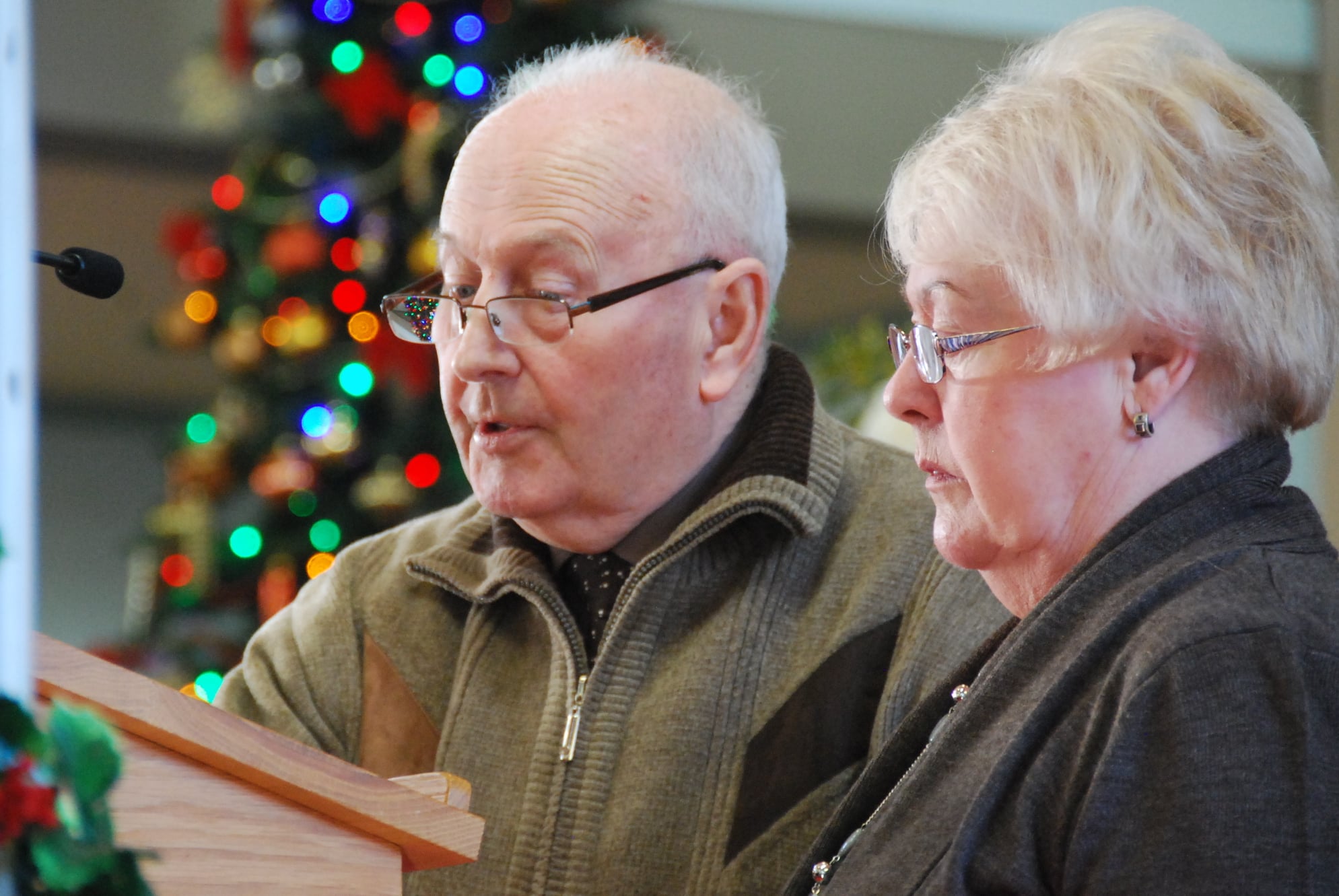
Mary and Ian Harper

Mary and Ian are both members of Imrproving New Cumnock, with Mary taking on the task of secretary as well. They spoke of the research into the Ministers buried in the Auld Kirkyard and Soldiers remembered or buried there.

Rab Wilson – “The Kirk’s Alarm” and ‘The Scottish Prejudice …”

Rab Wilson delivers 'The Kirk's Alarm'

Rab Wilson delivers ‘The Kirk’s Alarm’ under the pulpit of the parish church !

Who better than local lad Rab Wilson, who has gained national recognition for his brand of radical poetry, to deliver ‘The Kirk’s Alarm” beneath the kirk pulpit. Rab explained the poem was Robert Burns satirical attack of a band of Ayrshire ministers set in their old ways (‘Auld Lichts’), including the Reverend James Young of New Cumnock, or ‘Jamie Goose’ as the bard lampooned him.

“Jamie Goose! Jamie Goose, ye made but toom roose,
In hunting the wicked Lieutenant;
But the Doctor’s your mark, for the Lord’s holy ark,
He has cooper’d an’ ca’d a wrang pin in’t,
Jamie Goose! He has cooper’d an’ ca’d a wrang pin in’t

Rab also read ‘A Scottish Prejudice …. ” one of his own works which recalls his days at Primary School in New Cumnock – Primary 6 by coincidence. He tells how Mrs MacSween his teacher ‘wove magical spells’ in her stories about Wallace and Bruce and of the impression that made on him.

“Micht thon auld teacher wryly smile tae ken,
The boys she tocht hae nou grown Scots men,
An thon keen prejudice whilk kennled Burns
Whilk she sae glegly instillt intae us
Strivin tae mak siccar, lest we forget,
Still floods our veins, an nevirr will abate.”

Bobby Guthrie – “The Project’s Progress”

The lintel stane at the Auld Kirk

The lintel stane at the Auld Kirk

On behalf of the NCLG, Project Leader Bobby Guthrie gave thanks to all those that contributed and participated in the project as he presented an overview of its progress throughout the year, with the use of the marvelous multi-media system in the church.

He began by acknowledging the support of the NCLG and especially that of chairperson Ian Howat for the tireless works he does on behalf of the community.

Bobby also thanked project partners East Ayrshire Council and in particular Adam Geary (now with East Ayrshire Leisure) and Anneke Freele , who played a major role in turning our ideas for a village heritage trail into a structured proposal for funding applications.

Our first application , which included the construction of the footpath along the banks of the Afton to Pier Point and from there along to Nith Bridge was unsuccessful. Thankfully our friends at East Ayrshire Coalfield Environment Initiative with this part of the project as part of their fantastic path network they have created in the parish, and is now one of the best used paths in the village.

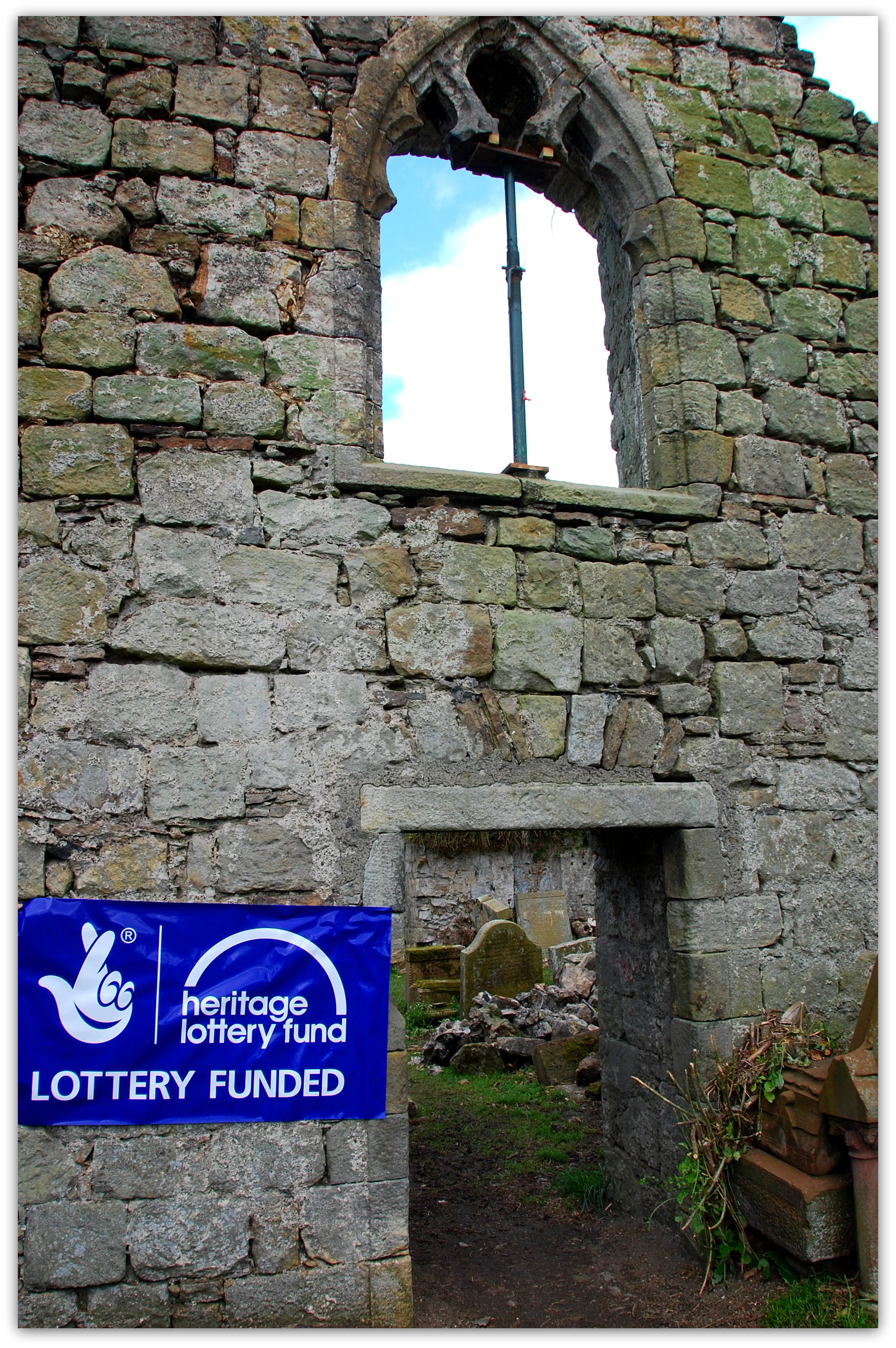
We restructured our funding applications and re-submitted them in November 2012 were delighted that these were approved by the Heritage Lottery Fund and by SCORE Environment on behalf of Barr Environmental Ltd through the Landfill Communities Fund. Since then we have received excellent support and advice from Catriona Macpherson at HLF and Mr. William Beattie at SCORE Environment.

HLF

barrlfc

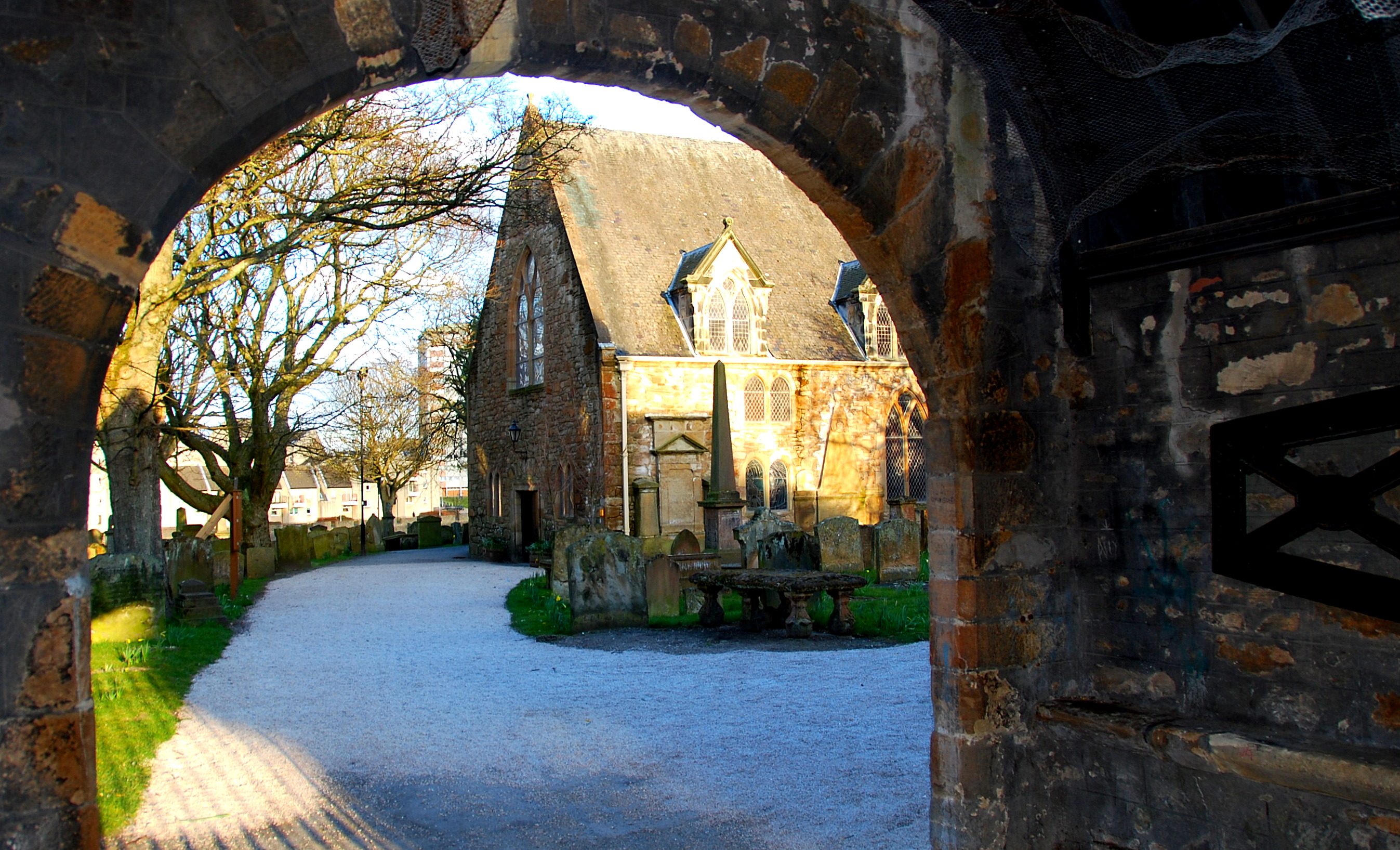
Auld Kirk and Kirkyard

There were many reasons for preserving the Auld Kirk ruin (a designated Listed Building)  from a historical,  architectural or Christian heritage viewpoint. Of course it is this church that put the ‘New’ in New Cumnock, when in 1650 the parish of Cumnock was sub-divided into the two new parishes of Old Cumnock (served by the existing or ‘old’ church) and New Cumnock served by the ‘new’ church.

Auld Kirk Transformation Phase 1

Auld Kirk Transformation Phase 1

East Ayrshire Council Neighbourhood Service Department, under the guidance of Robert McCulloch and Brian Jones,  implemented a programme of work to prune back much of the overhanging ivy and self-seeded trees to reveal more of the ruin. Further analysis of the ruin led to a recommendation by EAC that the project engage the services of Wylie Shanks Architects, their appointed Conservation Architects, to firm up a detailed programme of work on the ruins and the five family lairs identified in the original project application.

Following discussions with HLF and SCORE Environment we were delighted that we were able to re-align some of the funds to re-erect four fallen headstones on which soldiers that fell in the Great War were remembered

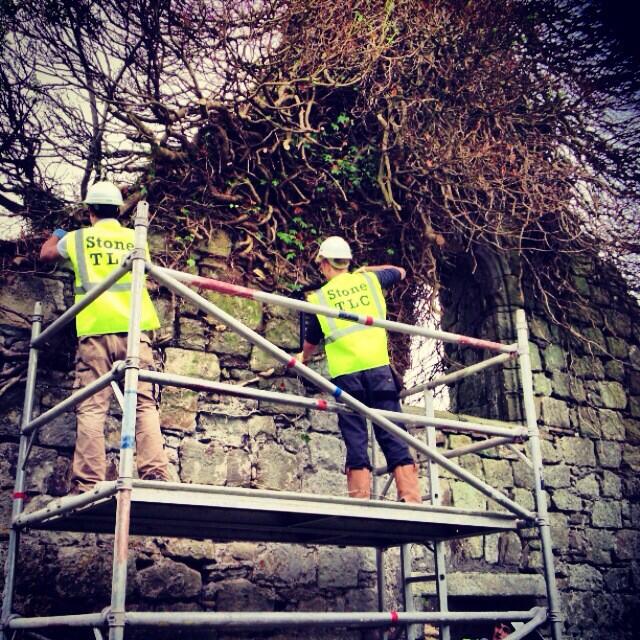
WylieShankslogo Stephen Kerr and Wendy Corrigan of Wylie Shanks put together a comprehensive work plan for the ruin (removing the remaining vegetation from the gable ends, stabilising masonry and  lime re-pointing) and the family lairs and soldiers’ headstones. Tenders were duly issued and appraised and Stone Timber & Lime Conservation were offered and accepted the contract.

Prior to Stone TLC  beginning work,  volunteers gathered over several summer evenings to rake away the fallen ivy leaves (and fight off the midgies), pull out weeds and clear up any rubbish within the ruin.

Clean-up Session 1

Clean up continues

Clean up continues

StoneTimberLineLogoGraeme Frew and his team from Stone TLC arrived on site and began the next phase in the transformation of the ruin which included revealing the bell-tower for the first time in living memory.

AuldKirk_Collage02

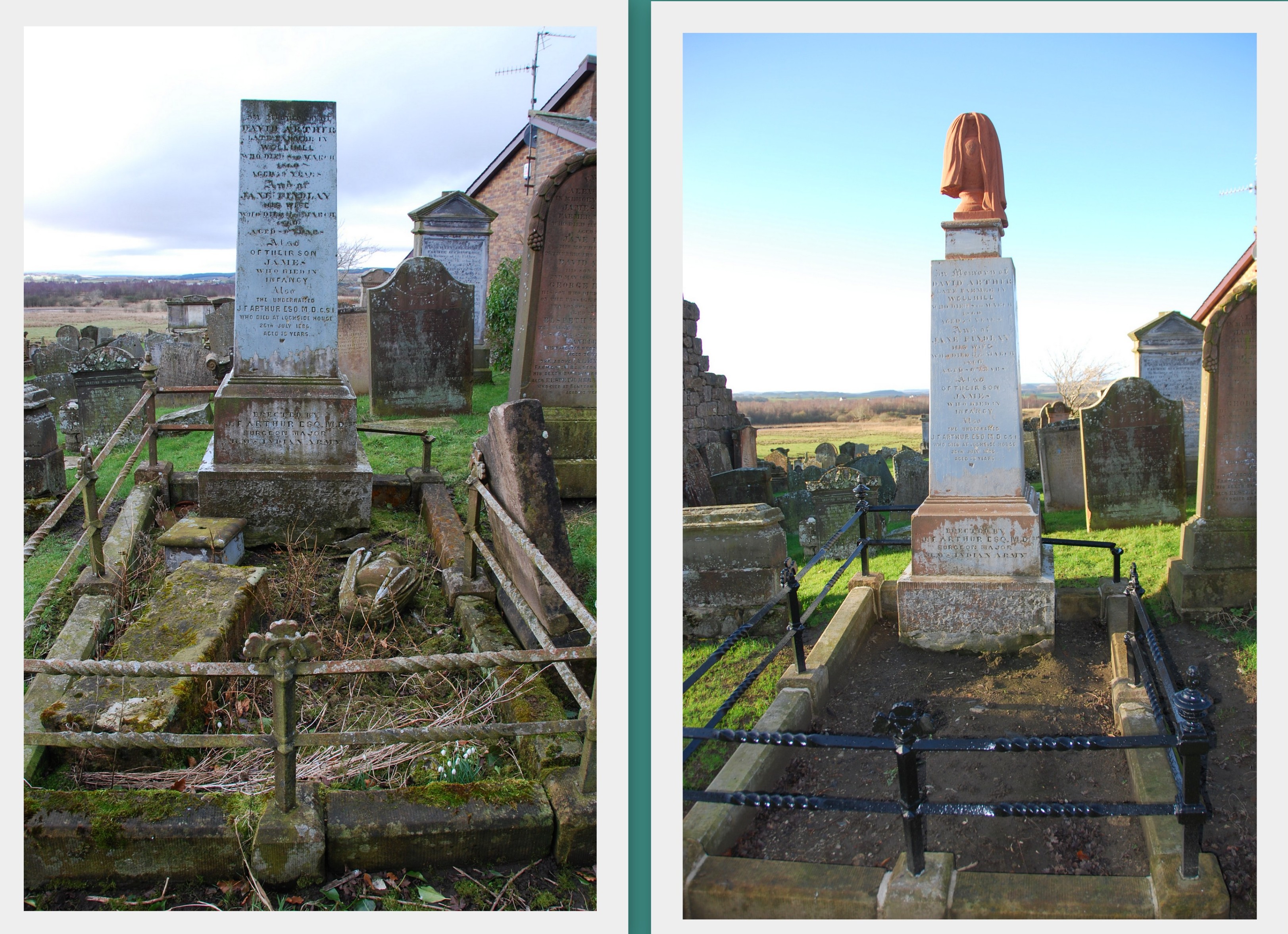
Work on the family lairs began with cleaning and repairing headstones with that of the Arthur Family proving the most challenging, including making a  copy of the original ceremonial urn.

ArthurFamilyLair

ayrshirememorialsTo re-erect fallen headstones the services of Ayrshire Memorials Ltd. were called upon. Russel Brooks and his team arrived with the impressive lifting gear to hoist the stones in preparation for securing to their newly dug foundations.

HLF_MemorialStones

William Sloan

William Sloan

The project team are in discussion with East Ayrshire Council to carry out some further work in the Spring, including laying gravel chips at several of the family lairs and re-locating some of the fallen masonry within the kirk – perhaps creating a cairn to house a commemoration plaque of the work carried out.

Gravemarkers for the three Kirkyard Trails have been produced by Ayrshire Memorials and these will be set during the Spring too, when further training on cleaning headstones will also be delivered.

Andy Bell, Ian Howat and Ian Lyell

Andy Bell, Ian Howat and Ian Lyell at Mauchline Kirkyard

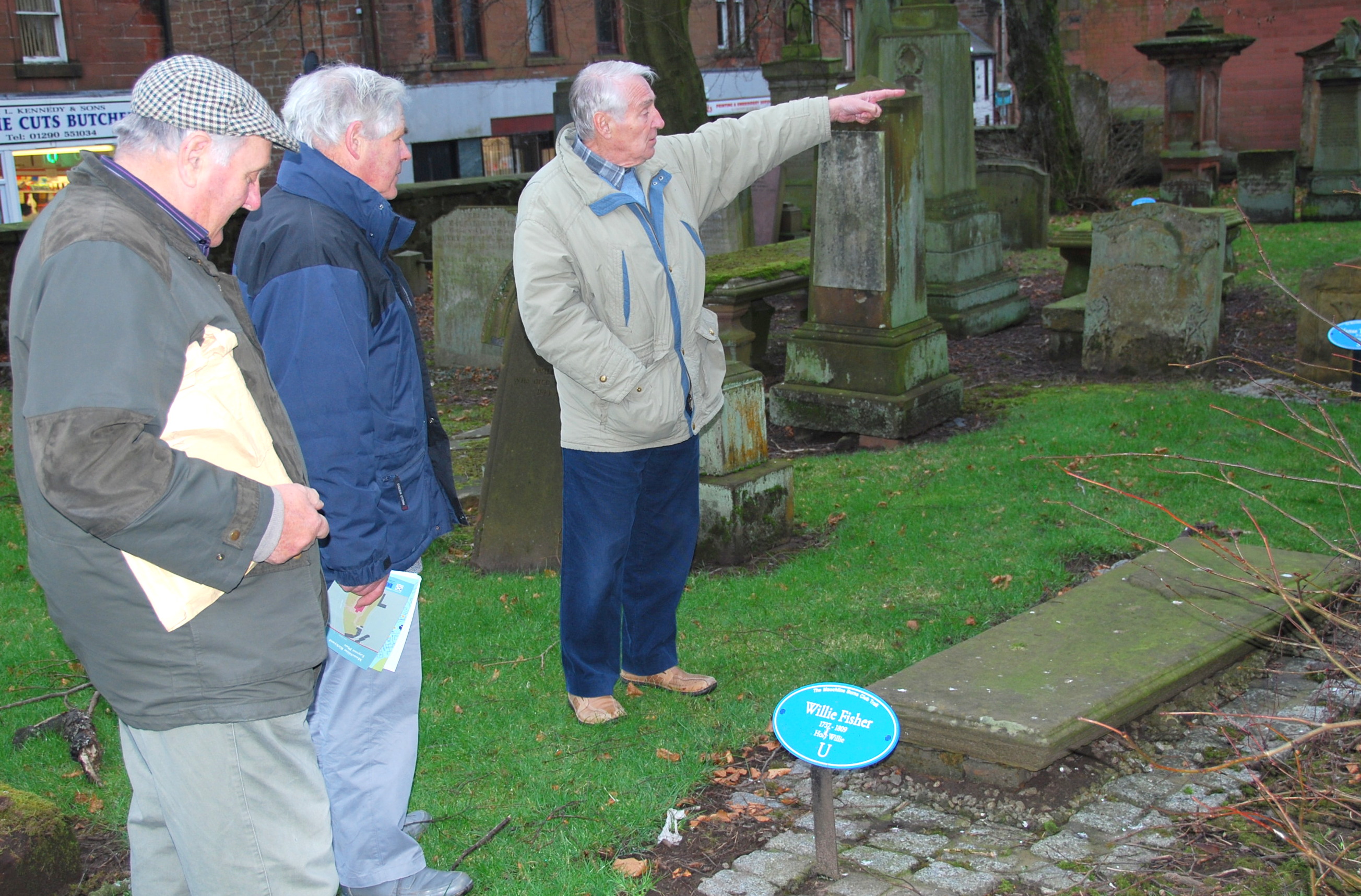
We may also take the opportunity to implement some of the ideas gleaned from the visit to meet with Mr Bell and Mr Lyell at the Mauchline Burns Club to witness the fantastic work carried out in Mauchline Kirkyard.

Auld Kirkyard Trails

Prior to the work carried out on the Auld Kirk ruin and the headstones, local community groups participated in

  • Discovery Trail

Project manager Bobby Guthrie selected 10 lairs in the kirkyard belonging to a cross-section of families with a range of occupations from throughout the parish. Class teacher Alison Smith set up a plan for P6 pupils of New Cumnock Primary School to discover the lairs and then record and share information with their classmates.

Altogether in the Auld Kirkyard

Altogether in the Auld Kirkyard

SchoolBurnsMonumentCentre

P6 at Burns Monument Centre – photo courtesy of BMC

Ross McGregor of Burns Monument Centre, Kilmarnock hosted a visit from the P6 class and introduced to them to a range of materials (e.g. archive records) and techniques (e.g. Scotland’s People on-line) to carry out further research on the families they were studying.

Bobby, provided some other information for the class to assist them in building a profile of the selected parishioners and later invited him to the school to interview him and ask questions to try and help fill any gaps!

  • Ministers and Soldiers Trails

Members of the New Cumnock Parish Church, New Cumnock History Club and New Cumnock Liaison Group tracked down the headstones of ministers and soldiers that are buried or remembered in the Auld Kirkyard and recorded the transcriptions.

Time Team

Time Team

Minister and Soldiers being researched at BMC

Ministers and Soldiers being researched at BMC

These groups too visited Burns Monument Centre to make use of the magnificent facilities and do further research to create a profile for the ministers and soldiered being studied/ During the visit they were shown the Ayr Presbytery Book by the archivist and in particular entries associated with the aforementioned Rev James Young, or ‘Jamie Goose’ as he is perhaps better known in the BMC!

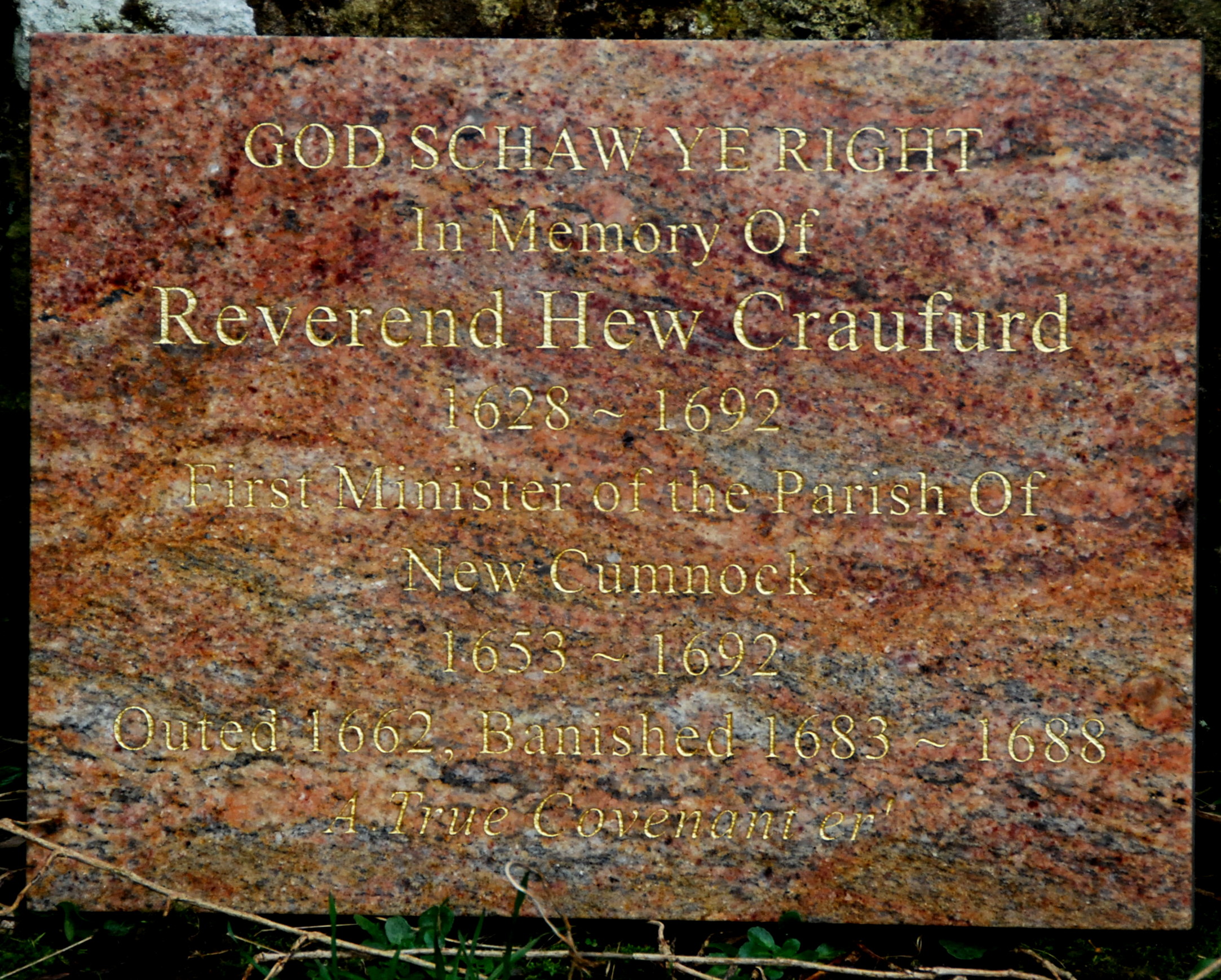
Rev. Hew Craufurd - First Minister of New Cumnock

Rev. Hew Craufurd – First Minister of New Cumnock

The headstone of the Rev. James Millar was beyond repair and a memorial plaque was beyond prepared. Plaques were also prepared  for the Rev. Hew Craufurd and Rev. Matthew Kirkland, neither of whom were buried in the Auld Kirkyard.

Ayrshire Memorials made the plaque and Mr Russel Brooks kindly donated one to the project team.

.

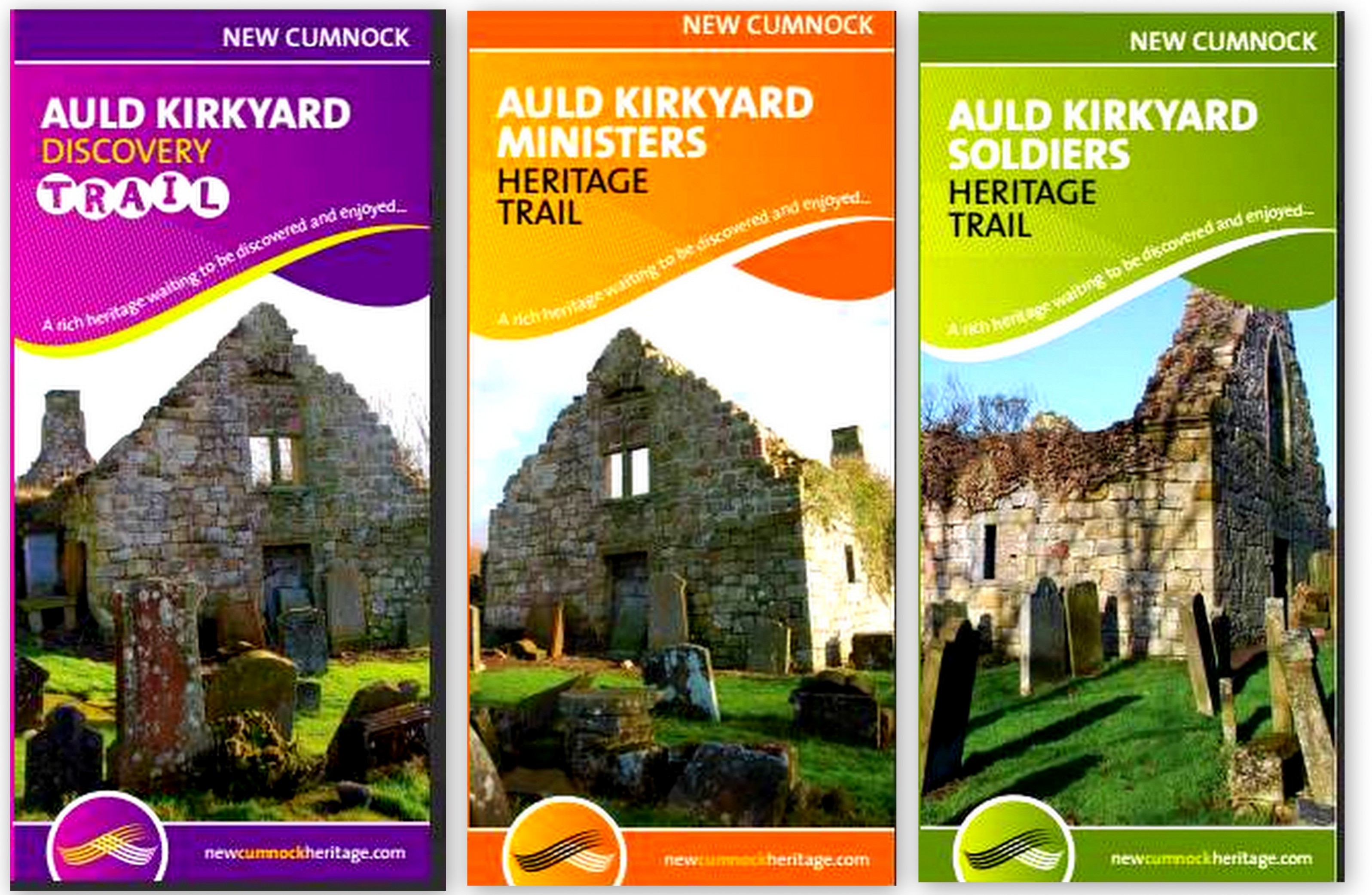
Auld Kirkyard Trail Leaflets

The profiles created from the research will be used as the basis of Auld Kirkyard Trail leaflets.

MuseDesignLogoMuse Graphic Design were selected to do the design for all four sets of leaflets ( 3 x  Auld Kirkyard leaflets and Village Heritage Trail leaflet) and for the interpretation panels that make up the Village Heritage Trail.

The logo that designer Alan Buttar created for the project, which includes a symbol of the meeting of the Afton Water and River Nith was particularly popular with the team.

Muse Design will also design and develop an interactive application based on the school children’s research which will be hosted on the Future Museum’s web-site. This will be completed before the end of March 2o14.

KirkyardTrailLeaflets

This set of three Auld Kirkyard Trails will go to print early in the New Year. The leaflet for the Village Heritage Trail is still a work in progress.

Village Heritage Trail

A total of eight locations were identified throughout the village for the siting of interpretation panels with information and images that would help tell the story of new Cumnock.  Two other panels were located in convenient locations which include a trail map.

Marion Ferguson and Alan Edgar of East Ayrshire Council Planning Department along with Sandra Marshall provided guidance and support in the completion of the necessary planning permission.  Mr and Mrs James Hamilton of Afton Bridgend and Mr John Campbell of Glenafton Athletic Football Club kindly gave permission for panels to be erected at their properties . The New Cumnock Community Council also kindly fully supported the project.

Click on Logo to visit BSG's web-site

Border Signs Graphics manufactured and installed the panels.

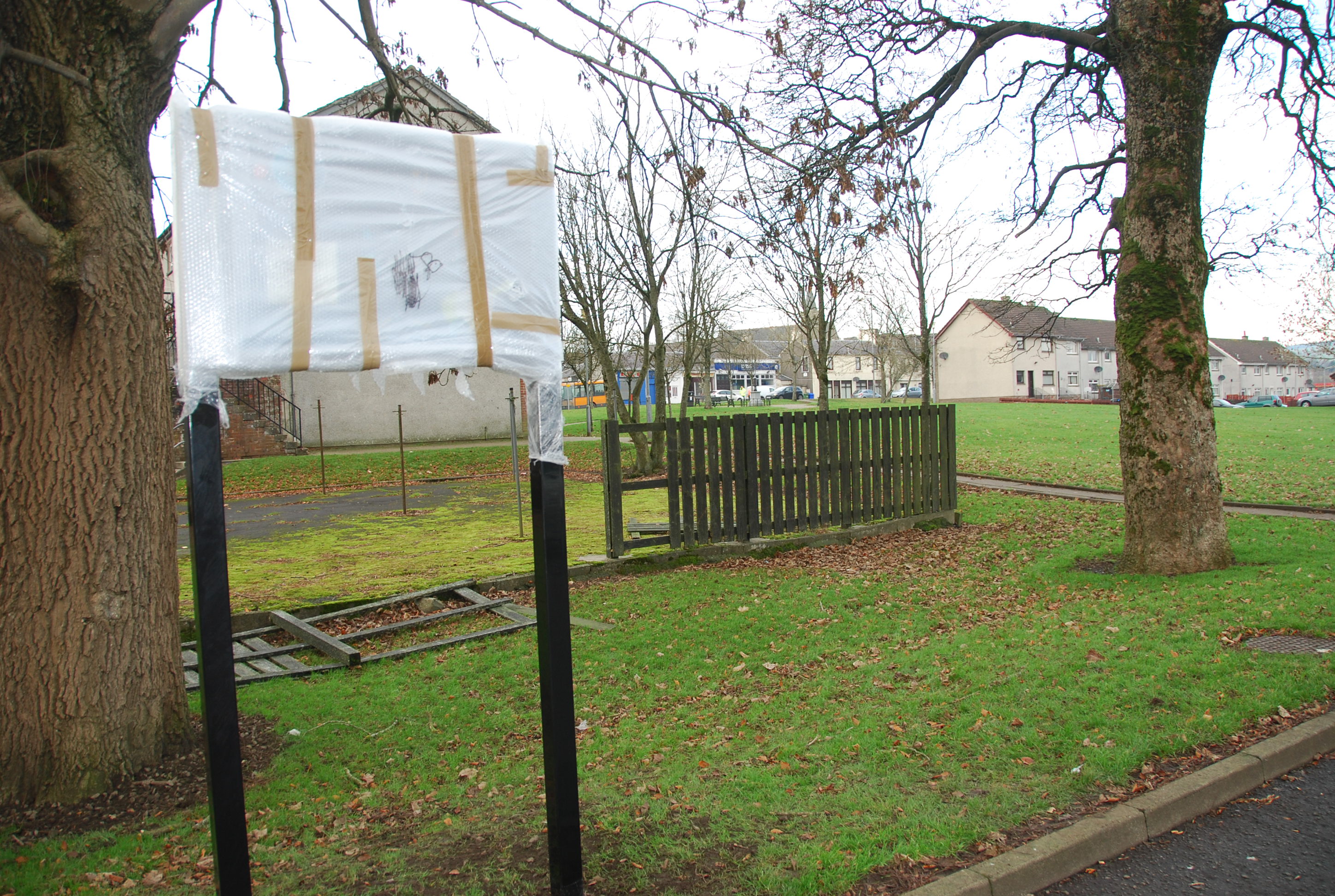
One panel, which is to mounted on a small cairn, has yet to be installed.It is intend to erect the cairn early in the New Year.

PanelA_Collage

Panel at the New Cumnock Railway Station with the Heritage Trail Map and a small parish map showing other points of interest.

Panel04_Collage

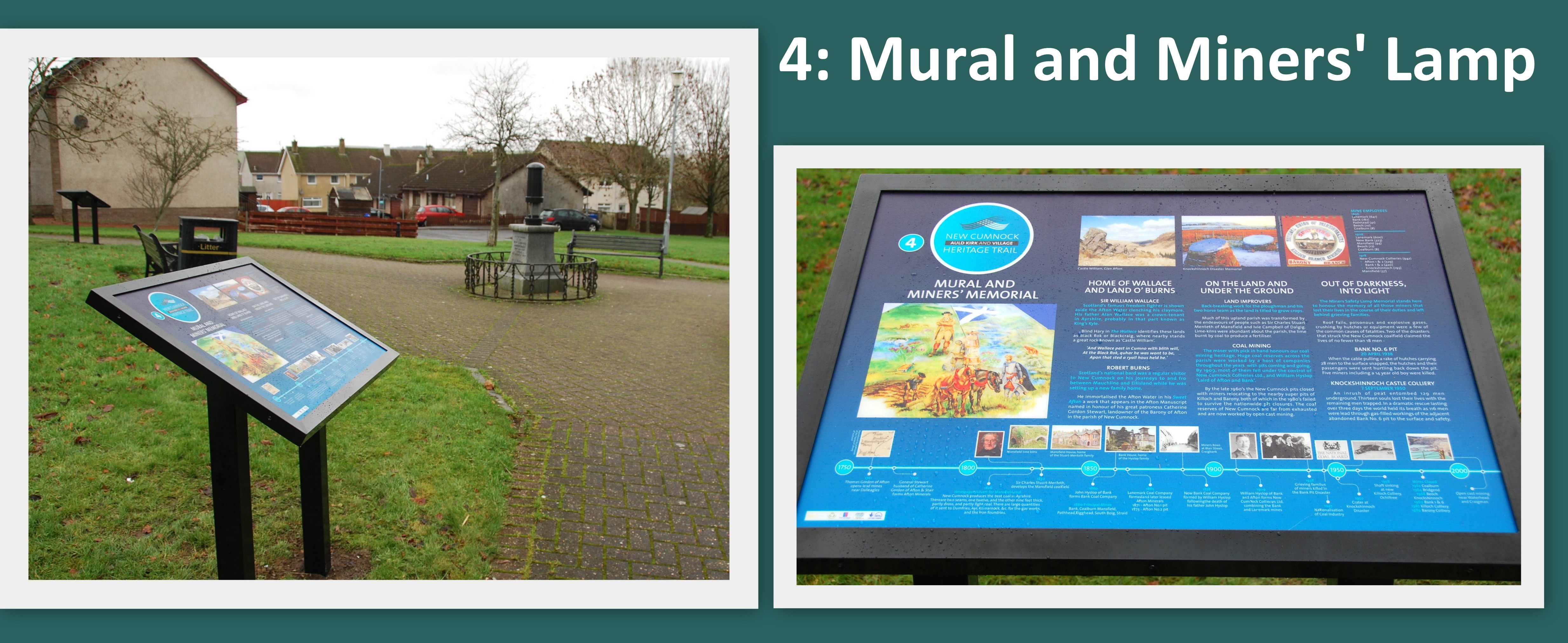
Interpretation Panel at the Castle Green about the New Cumnock Mural and the Miners’ Memorial Lamp.

Closing Remarks

Douglas Reid, Leader of East Ayrshire Council, on behalf of the project partners thanked everyone for their contribution to the project

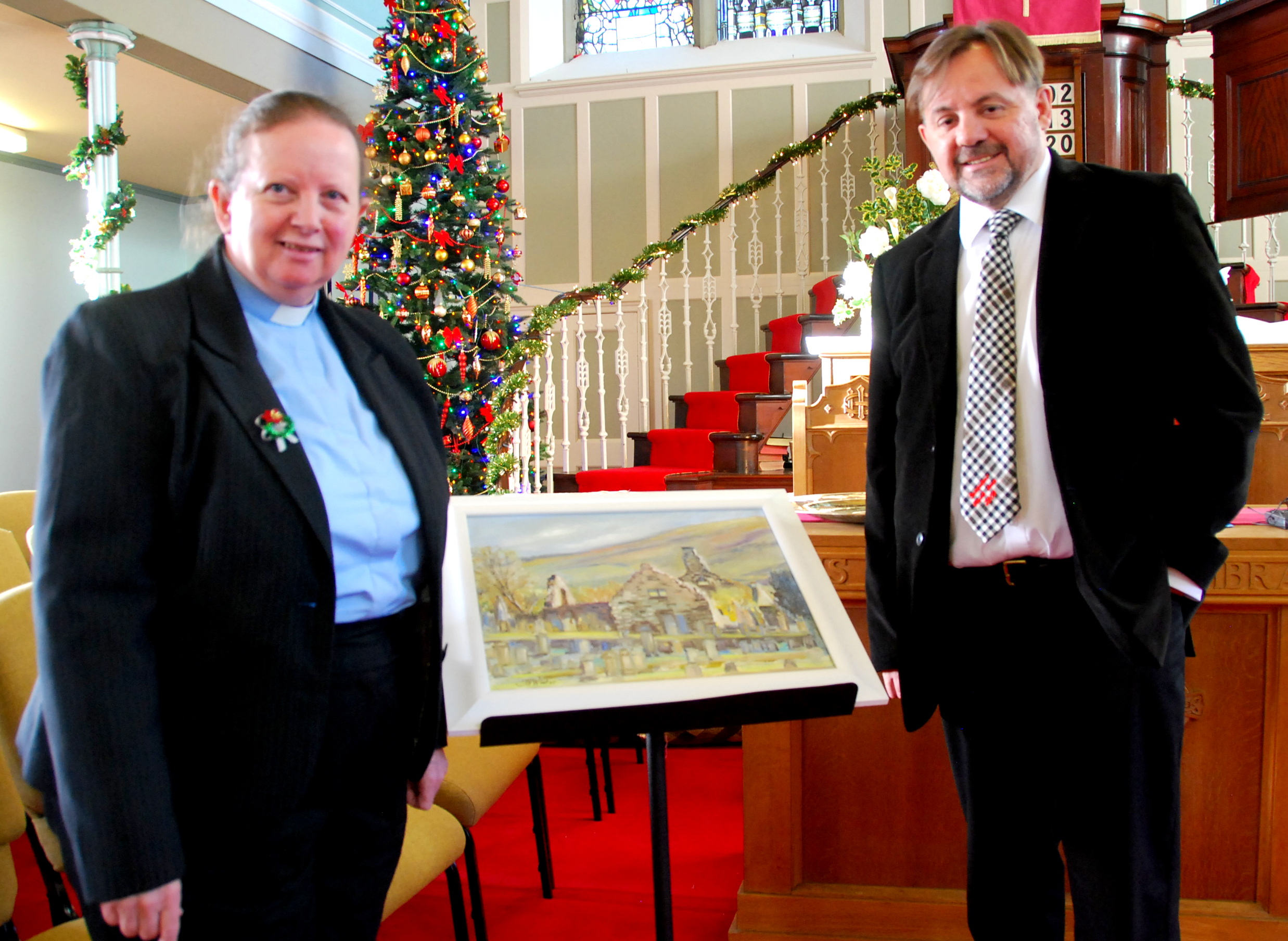
The Reverend Helen Cuthbert then invited school pupils to unveil a fantastic painting of the Auld Kirk and Kirkyard, the transformation having inspired local artist Julie Winter to put brush to canvas.

RevHelenCuthbertandRabWilson

school_church

.guests

Guests retired to the Church Hall for a marvelous lunch with teas and coffees served by the friendly faces of the Church Guild.

Project Photographic Display

photographic_display

A static photographic display was also set up in the Church Hall for afternoon visitors, many thanks to Ciss McCreadie of East Ayrshire Council, Vibrant Communities and my wife Sheena for their assistance in setting it up.

Village Heritage Trail takes shape

Click on Logo to visit BSG's web-site

The Borders Signs and Graphics team from Dumfries arrived at New Cumnock on Wednesday morning to start the installation of the Interpretation Panels .We began by walking round the trail and marking out each out of the locations in turn and then Davie and his team got started.

  • Information Panel with Village Trail Map at the entrance to the Railway Station

Railway Station

Railway Station

Information Panel with Village Trail Map at the Castle Green Car Park Station

Castle Green

Castle Green

Information Panels on the Castlehill at the Auld Kirkyard wall

1. Cumnock Castle 2. Parish of New Cumnock

Castlehill

Castlehill

Information Panels at the Auld Kirk Kirkyard

Auld Kirkyard

Auld Kirkyard

Information Panels at the Castle – Mural and Miners’ Lamp Memorial

Castle : Mural and Miners Lamp

Castle : Mural and Miners Lamp

Information Panels at the Castle – Castle Merchants

Castle: Merchants

Castle: Merchants

On Thursday , BSG returned to install the panels at Shilling Hill and Glenafton Athletic/

One panel remains to be installed at Pier Point, where this will be mounted on a small cairn.

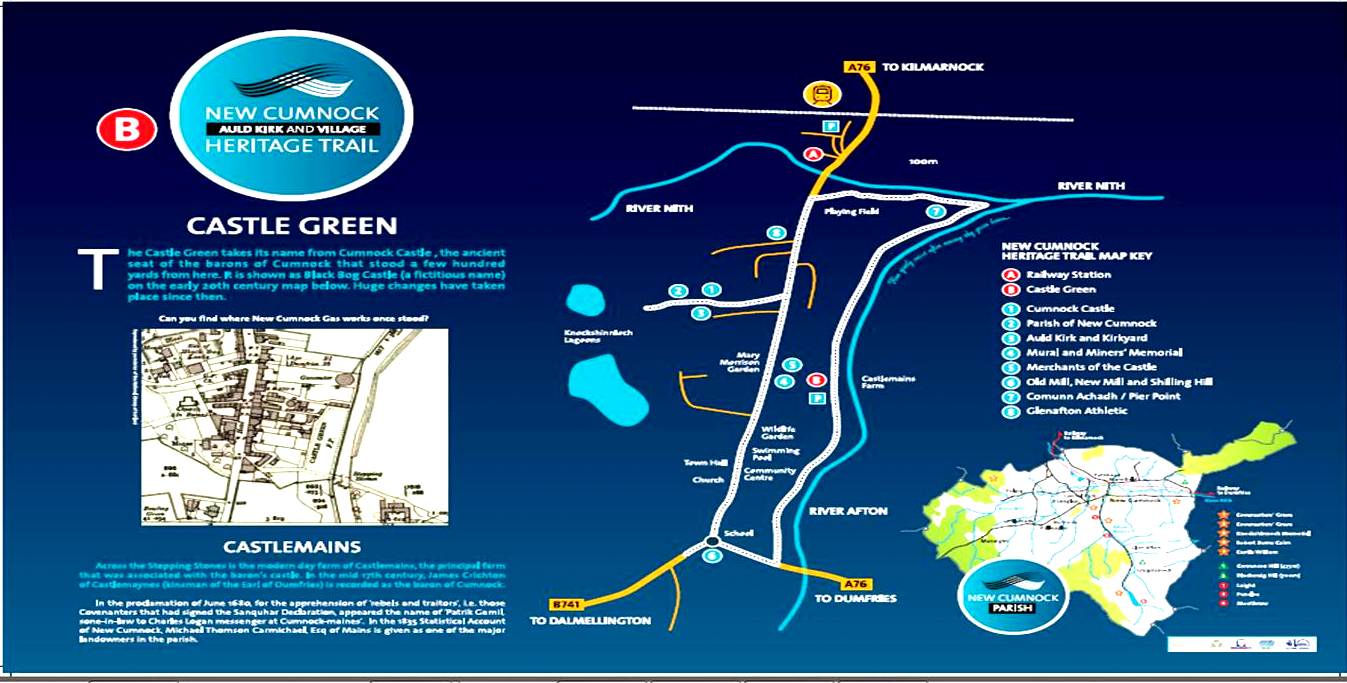
Here is an example of Trail Map that can be found at the Railway Station and the Castle Green Car Park.

CastleGreenPanelB

New Cumnock Village Heritage Trail taking shape

Auld Kirkyard connections with Canadian Forces

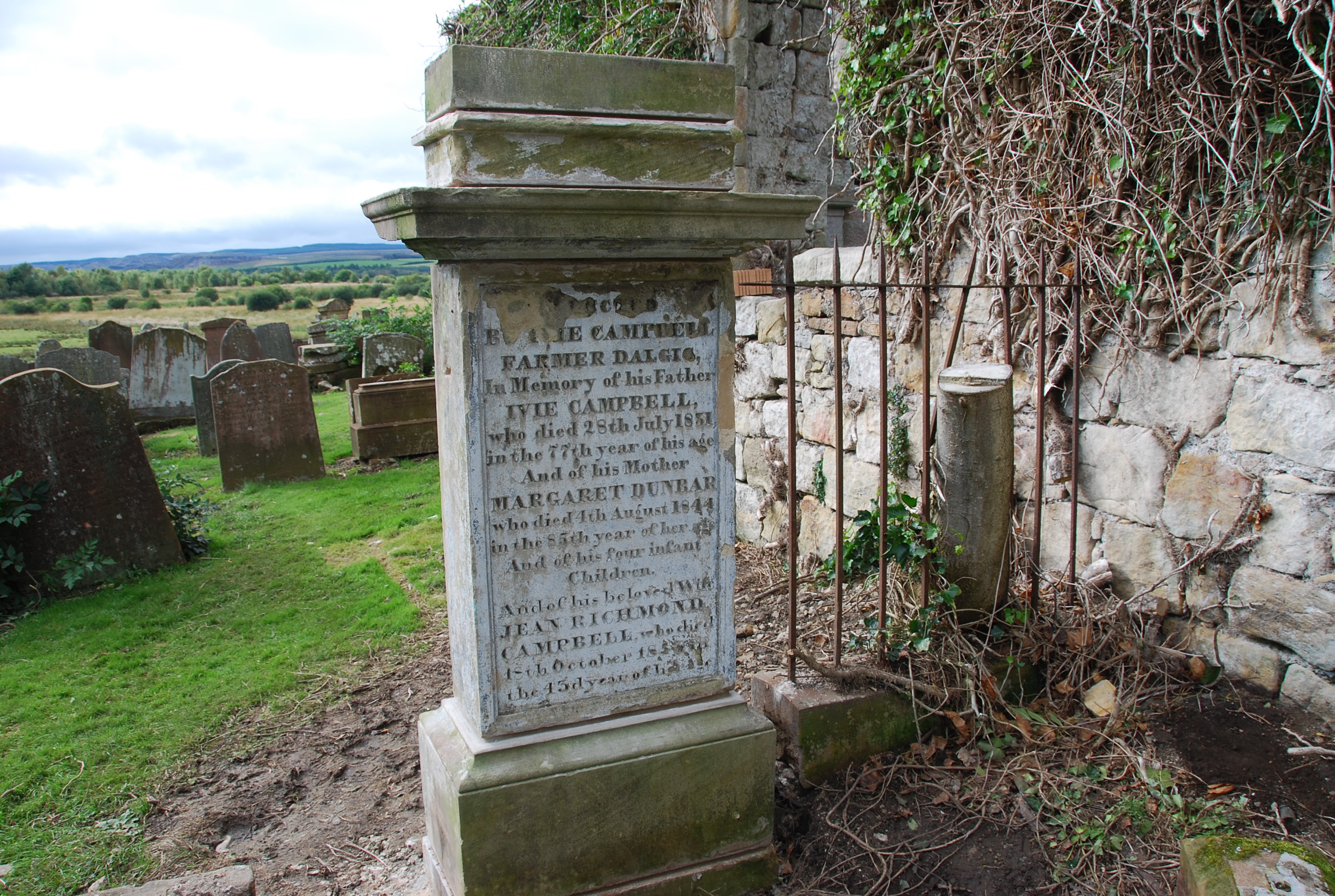
Today on Armistice Day the words of the epic war poem ‘In Flanders Fields’ are close to mind, written by John Alexander McCrae , a Canadian with strong roots in New Cumnock. His great great grandfather Ivie Campbell lies in the Auld Kirkyard.

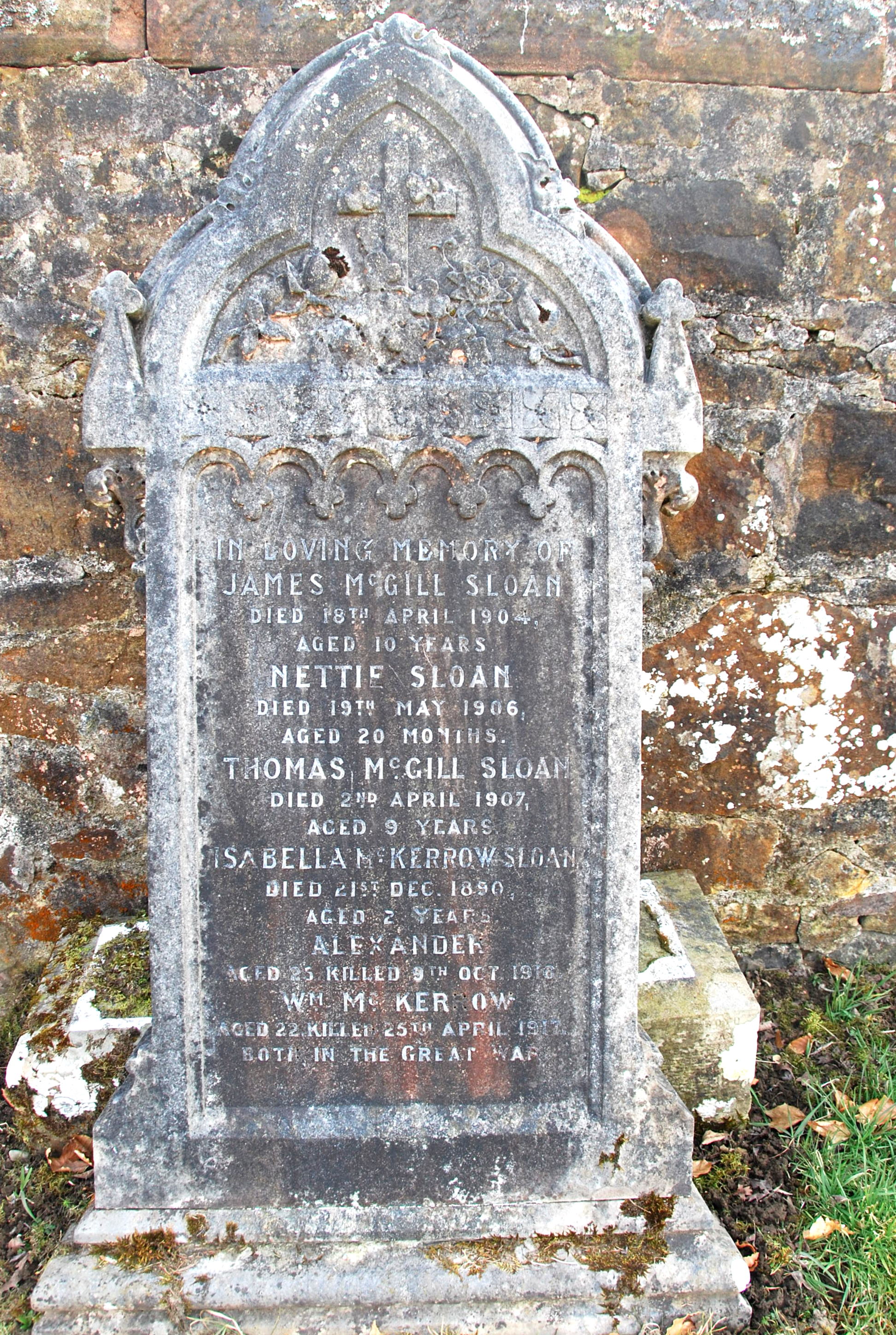
The names of two other New Cumnockians, Alexander Sloan and Robert Paterson, both of whom emigrated to Canada  and were lost in the Great War whilst serving in the Canadian Over-Seas Expeditionary Forces are also remembered on family headstones.

Ivie Campbell

Ivie Campbell

Ivie Campbell

Ivie Campbell was born in 1754 at the farm of Garclaugh and later turned Dalgig into a prize-winning farm.  One of his sons, William,  farmed at Maneight where his daughter Jean Campbell was born in 1814 on Christmas Day.

Maneight

Maneight

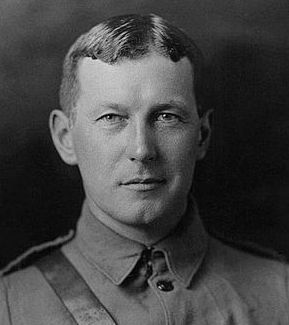
Jean married Thomas McCrae of Kells, Kirkcudbrightshire and the couple along with  their young family emigrated to Canada. One of their grandsons John Alexander McCrae served as a surgeon in the Canadian artillery in the Great War. The death of an acquaintance inspired him to write the epic war poem ‘In Flanders Field’.

John McCrae

John McCrae

In Flanders Field

‘In Flanders fields, the poppies blow
Between the crosses, row on row,
That mark our place; and in the sky
The larks, still bravely singing, fly
Scarce heard amid the guns below.’

John McRae, died of pneumonia on 28th January 1918.

Read more about his New Cumnock roots here

Private Alexander  Sloan

  • 49th Canadian Infantry Regiment Alberta

Sloan family headstone

Sloan family headstone

In a remarkable coincidence some 70 years after the birth of Jean Campbell at Maneight, brothers Alexander,William and John Sloan were born in the same farmhouse.

Alexander emigrated to Canada where he found work as a bank clerk . On 15 July 1915 at Edmonton, Alberta, he signed up to serve in the Canadian Over-Seas Expeditionary Forces. Some 15 months later he was killed in action on 9th October 1916 at the Battle of the Somme, aged 25 years.

His younger brother William was killed in action at  Macedonia on 25th April 1917 and elder brother John was awarded the Military Medal.

Alexander and William fell on foreign fields and both are remembered on the family headstone here in the Auld Kirkyard.

Sergeant Robert Paterson

  • 29th Canadian Infantry British Columbia Regiment    

Robert Paterson

Robert Paterson

Robert was born on 6th February 1879 at Coalcreoch farm, the son of Gavin Paterson and Mary Mitchell. He served in the Ayrshire Yeomanry before emigrating to Canada.

On the 11th November 1914 (99 years ago today) at Vancouver, British Columbia he signed up to serve in the Canadian Over-Seas Expeditionary Forces.

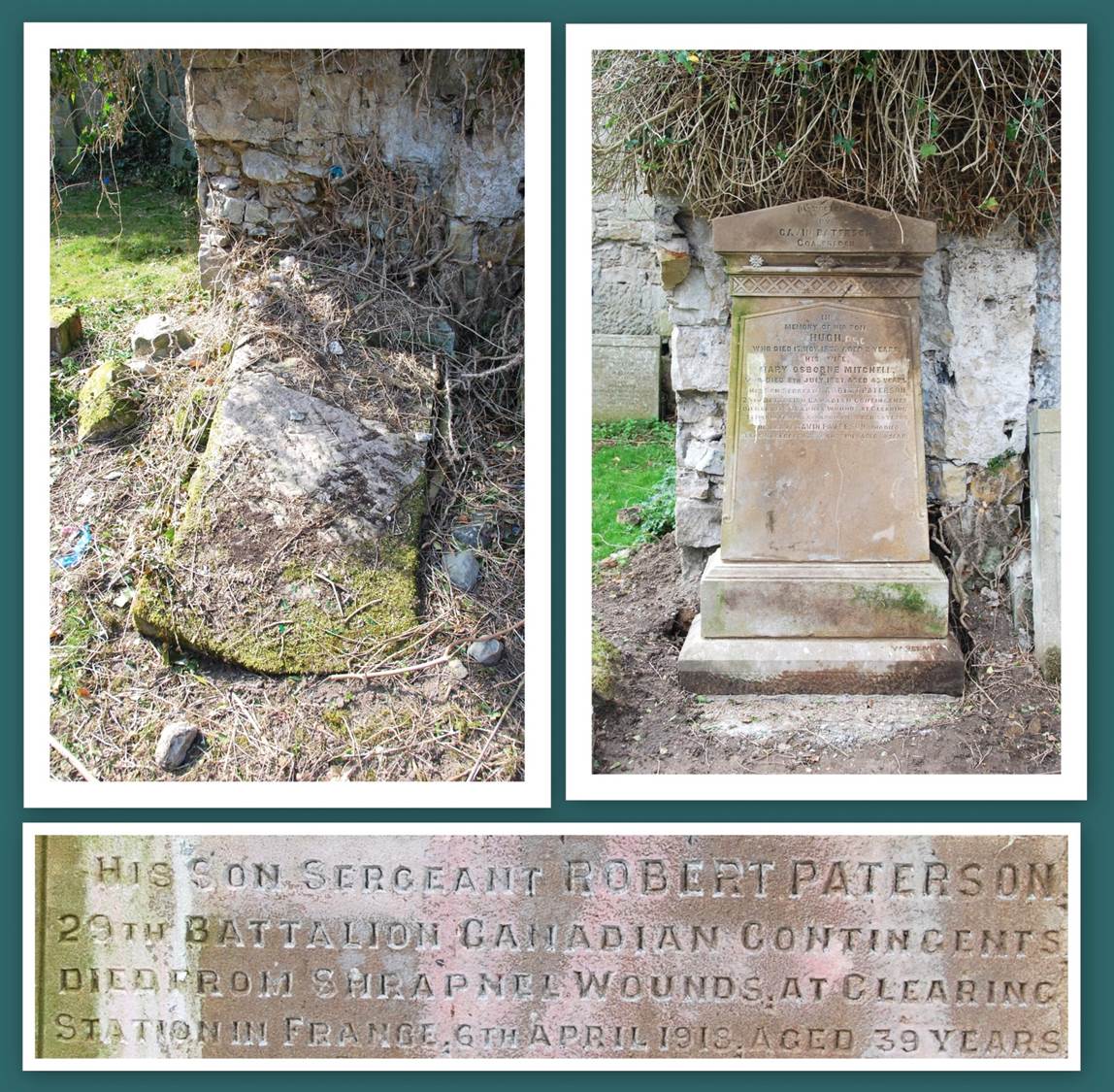
Robert died of shrapnel wounds in a casualty clearing station in France, on 6th April, 1918, aged 39 years.

Auld Kirkyard Remembrance Sunday

‘DWELLERS ALL IN TIME AND SPACE’

Take a walk through the Auld Kirkyard and there you will find names of several soldiers remembered on family tombstones – alongside unforgettable names such as Somme, Gallipoli and Palestine carved into  aging stone.

As part of our project we secured funds to make repairs to five of the stones and to produce a Soldiers Trail leaflet to enhance your visit to the Auld Kirkyard.

Soldiers:Collage_Arthur_Montgomerie

INDIAN MUTINY (1857-1859)

Surgeon-General John Findlay Arthur (1st Madras Fusiliers)

  • Born at Crook , a cottage on the Arthur family’ lands of Wellhill.  He served as surgeon to the 1st Madras Fusiliers who entered Lucknow as part of the 1st Relief Force during the Indian Mutiny and later served in the siege and capture of Lucknow. John was awarded ‘The Most Exalted Order of the Star of India’, C.S.I. in June 1869. He died at Lochside House, 1886, aged 79 years.

BOER WAR (1899-1902)

Sergeant John Montgomerie (17th Battalion Imperial Yeomanry)

  • One time resident in the Old Mill and his father later farmed Dalhanna.  John died of his wounds at Boshof, South Africa, on 28th  March 1901, aged 33 years.

Soldiers: Collage_McKenzie_Sloan

GREAT WAR (1914-1919)

Private Douglas McKenzie (2nd Argyll and Sutherland Highlanders)

  • His family lived at Old Coalburn. Douglas was killed in action at the Battle of Passchendaele, 25th September 1915, aged 19 years.

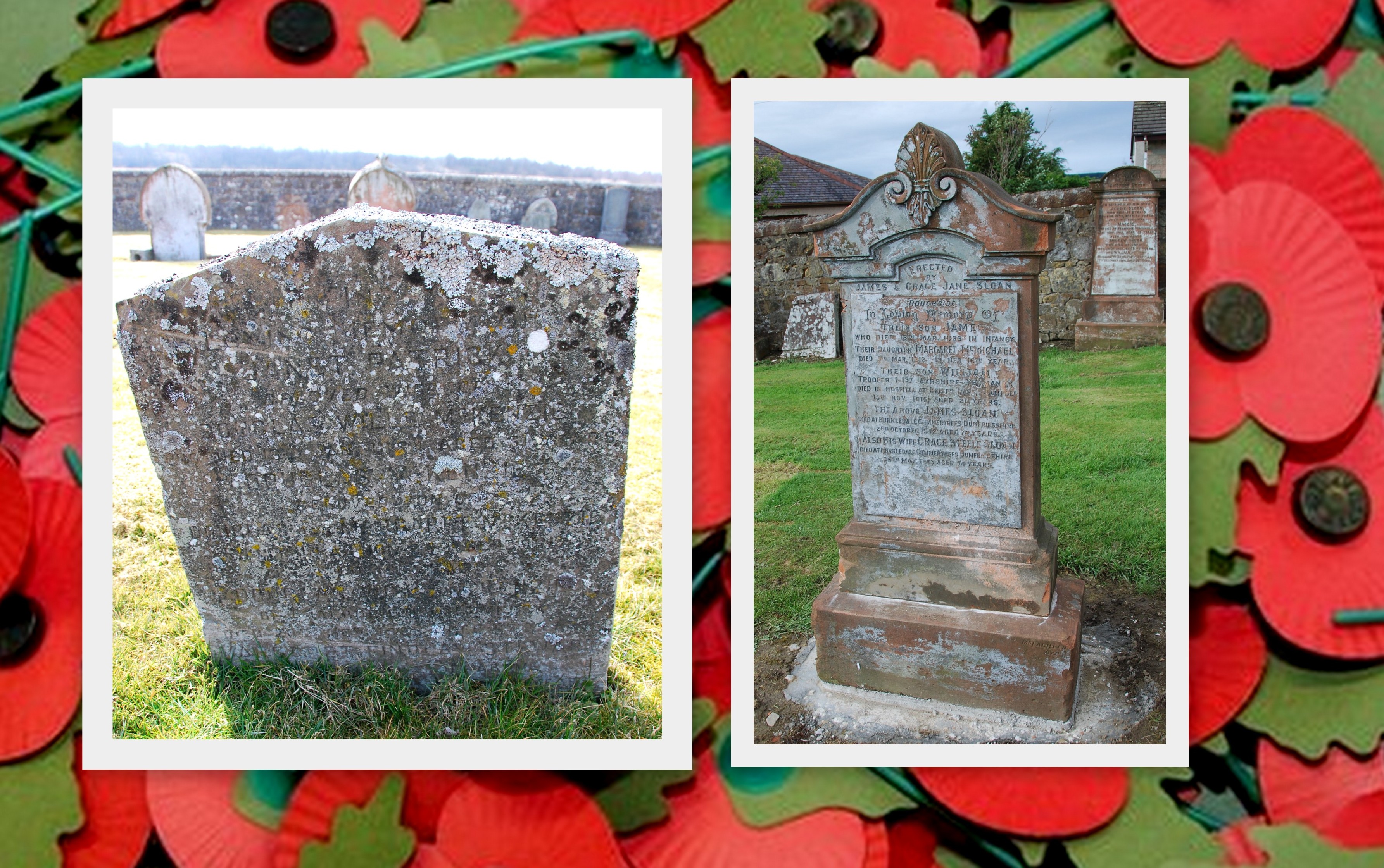
Private William Sloan (1/1st Ayrshire Yeomanry)

  • The Sloan family farmed at Roughside. William died of his wounds in hospital at Helles, Gallipoli on 15th November 1915, aged 21 years.

Soldiers: Collage_Murphy_Sturrock_McKerrow

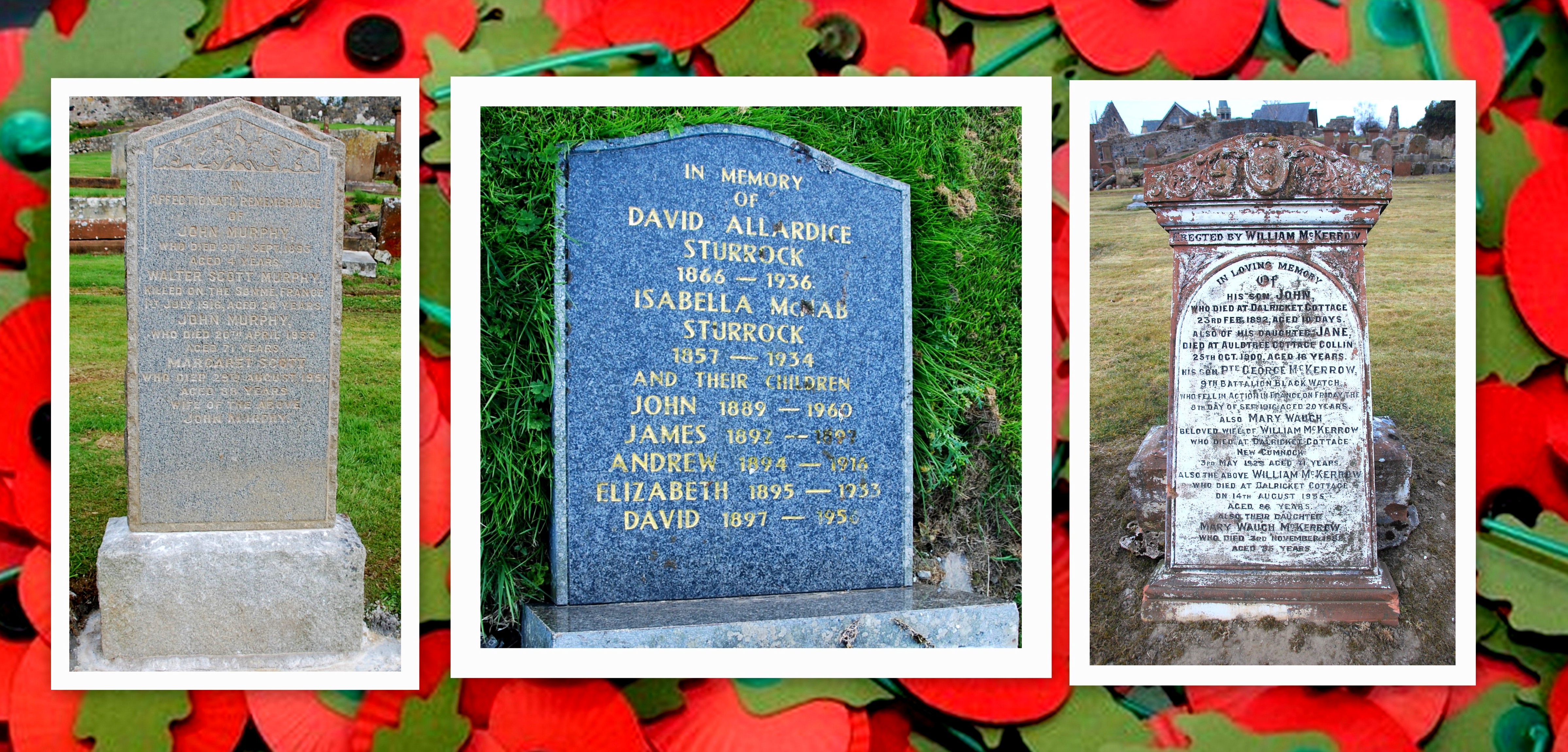
Private Walter Scott Murphy (Highland Light Infantry)

  • His family lived at Bluebell Cottage (Tank) and he worked at the railway station. Walter was killed in action on the first day of the Battle of the Somme, 1st July 1916, age 24 years old

Lieutenant Andrew Sturrock (3rd Royal Scots Fusiliers)

  • The family originally from Forfar lived at Castlehill and then Mossmark, where his father worked as a tailor’s cutter. Andrew was killed in action at the Battle of the Somme, 14th July 1916, age 21 years.

Private George McKerrow (9th Black Watch)

  • A champion ploughman he lived with his family at Dalrickett Cottage. George was killed in action at the Battle of the Somme, 8th September 1916, age 20 years.

Soldiers: Collage_Sloan_Mathieson

Private Alexander Sloan (49th Canadian Infantry Alberta Regiment)

Private William McKerrow Sloan (8th Duke of Cornwall’s Light Infantry)

  • The McKerrow brothers were born at Maneight . Alexander emigrated to Canada where he served in the Canadian Overseas Expeditionary Force and was killed in action at the Battle of the Somme, 9th October 1916, age 25 years. William was killed six months later in the Balkans campaign on 25th April 1917, age 22 years.

Private Joshua Mathieson (11th Argyll and Sutherland Highlanders)

Private Thomas Mathieson (5th King’s Own Scottish Borderers)

  • The Mathieson brothers’ father worked as a cloth merchant at Pathhead before moving to Kirkconnel where the boys were born.  Joshua was killed in action at the Battle of the Somme on 15th September 1916, age 18 years. Thomas, died of infectious jaundice on 9th November 1917, age 24 years.

Soldiers: Collage_Murray_Mackenzie_Paterson

Private Robert Murray (1st / 4th Duke of Cornwall’s Light Infantry)

  • The family lived at Connel bridge where Robert worked in his father’s shop. Robert was killed in action at Palestine on 22nd November 1917, age 24 years.

Private Archibald MacKenzie (1st and 5th Sherwood Foresters)

Born at Rottenyard farm, he enlisted while working as a ploughman at South Boig. Archibald contracted pneumonia and was brought home but died in Glenafton Sanitorium.

Sergeant Robert Paterson (29th Canadian Infantry British Columbia Regiment)

  • A farmer at Coalcreoch he emigrated to Canada and served in the Canadian Overseas Expeditionary Force. Robert died of his wounds in a casualty clearing station in France, 6th April 1918, age 39 years.

Soldiers: Collage_Ross_Galston_Dick

Private Archibald Ross (Royal Scots Fusiliers)

  • His father Hugh was a grocer and spirit dealer at Craigbank. Archibald moved to Cathcart where he enlisted. He contracted pneumonia and died at Victoria Infirmary 22nd July 1918, age 19 years.

Private James Galston (1st and 5th Royal Scots Fusiliers)

  • Son of a Glasgow clogmaker he moved to Pathhead to work in the coal mines and later married a local girl. James died of his wounds in France, 17th September 1918, age 27 years.

Private Thomas Samuel Dick (31st Machine Corps, Infantry)

  • He lived with his family at Boig Road and worked in the local mines. Thomas died at Kilmarnock Infirmary of tubercular peritonitis 19th August 1919, age 20 years.

THANK YOU

  • Our project team are indebted to the fantastic endeavours of Mr. Richard Bain.  Please visit his remarkable research resource here

Help for our Heroes

ayrshirememorialsRussell Brookes and his team from Ayrshire Memorials have made great progress on the four soldier headstones we thought worthy of the most immediate attention. Below we have some before and after photographs we would like to share.

William Sloan, Roughside

  • William’s headstone is in danger of being broken on its base.

William Sloan

William Sloan

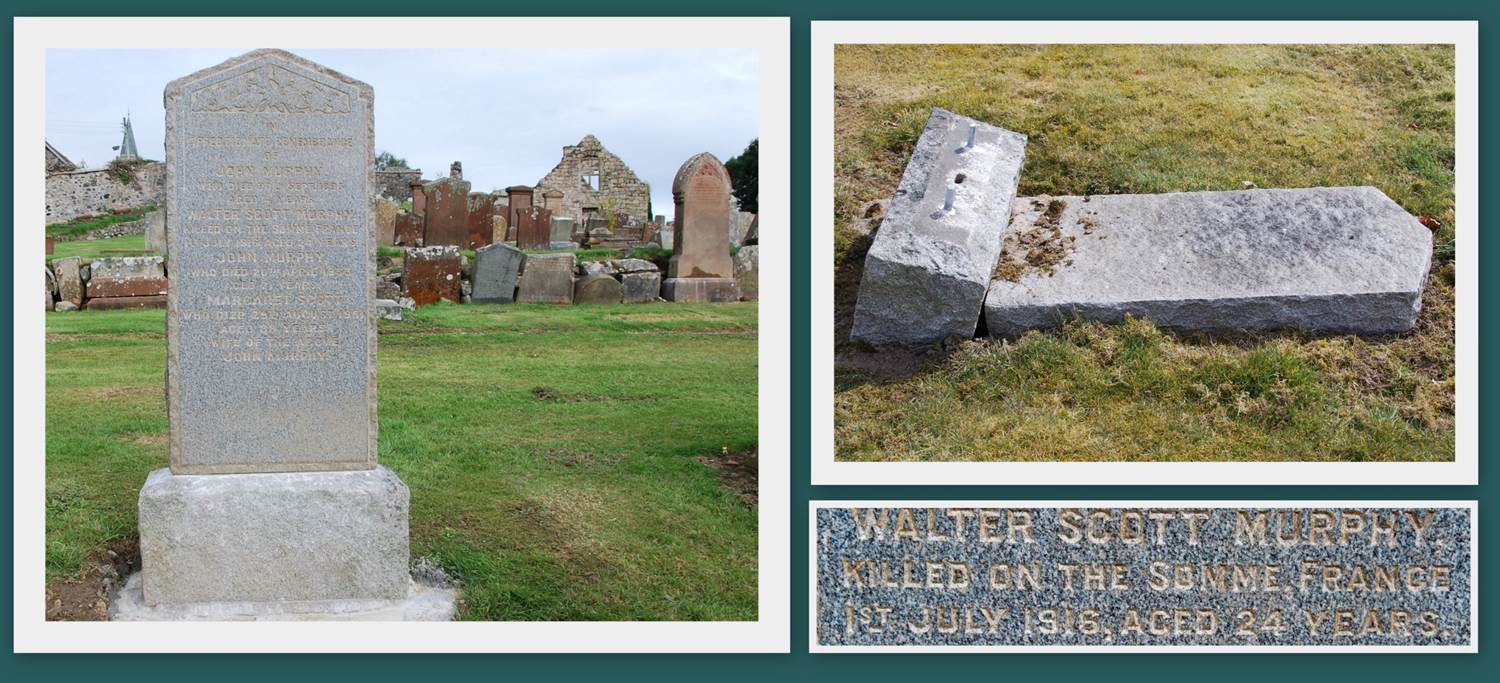
Walter Scott Murphy, Bluebell Cottage

  • Walter’s headstone had fallen face-down with the inscription hidden.

Walter Scott Murphy

Walter Scott Murphy

Archibald MacKenzie, Rottenyard

  • Archibald’s fallen headstone had been re-erected at the wrong location and with the inscription facing away.

Archibald MacKenzie

Archibald MacKenzie

Robert Paterson, Coalcreoch

  • Robert’s headstone had fallen face down and to make matters worse the face had previously suffered from mindless graffitti – hopefully we can attempt to have it cleaned.

Robert Paterson

Robert Paterson

.

New Beginnings at the Auld Kirk

AULD KIRK RUINS

aa_HLF_auldkirk01Things are moving along at a great pace in the Auld Kirk.

  • Vegetation has been removed from the ruin to reveal parts of the Auld Kirk that have never been seen for generations.
  • The next phase includes essential masonry repairs to part of the ruins.
  • Followed by a programme of lime pointing

HLF_AuldKirk_BeforeAfter

HEADSTONES

Work has started on cleaning and repairing some of the headstones

Reverend Thomas Hunter

The lair of the Reverend Thomas Hunter and his family lies against the Auld Kirk walls. He served the parish for 50 years and died in 1760, aged 95 years.  His first spouse Christian Ker lies and son Joseph lie buried here too.

HLF_RevHunter_BeforeandAfter

Soldiers

A number of the family headstones which remember their sons fallen in the Great War required to re-set in new foundations.  Local firm Ayrshire Memorials from Auchinleck came to the rescue with an amazing piece of kit that could lift the fallen stones, some weighing 1.5 – 2 tonnes.

HLF_MemorialStones

  • Ayrshire Memorials at work

aa_soldiersfoundation

New foundations with securing pins now in place.

Of course on occasions the Auld Kirkyard doesn’t only allow us ‘to walk in the footsteps of  our ancestors’ it delivers some wonderful sunsets.

aa_sunset

.

Uncovering our parish roots

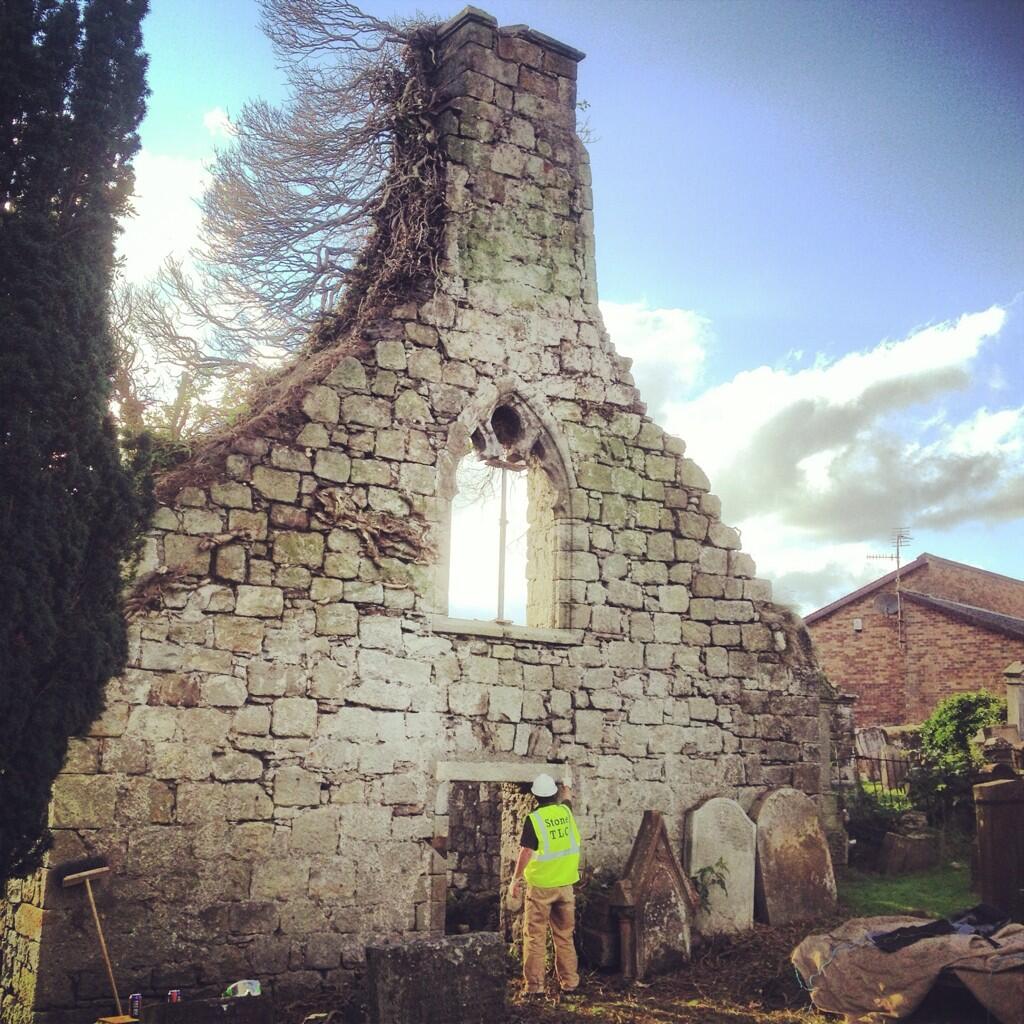
StoneTimberLineLogoStone, Timber & Lime Conservation are have started the work on preserving the ruins of the Auld Kirk.

  • Removing the roots of the ivy is beginning to reveal parts of the kirk that haven’t been seen for many years.

BTJbKqCIcAAW6SB.jpg large

  • The east entrance to the old kirk with the window revealed and the top of the bell tower.

BTQPJMVIAAAYs_R.jpg large

  • Stone TLC tell us this is a good example of a traditional harl finish, a technique for providing a weather-proof finish. The lime deposits in New Cumnock at both Benston and Mansfield were known its property of being able to bind under water, and used in bridge building.

BTQDv-DIgAA1HJc.jpg large


All photos courtesy of Stone TLC